Serengeti National Park with Jumbo Trails
Map of Serengeti
Tap to enlarge map
Serengeti National Park
You’ve seen the photographs. The wildebeest crossing. The lion on the kopje. The hot air balloon over a sea of golden grass at first light.
The Serengeti is one of the few places on earth where the reality is better than the image.
Not because it’s bigger than you expect — though it is, nearly 15,000 square kilometres of it — but because it’s alive in a way that photographs can’t fully communicate. The sounds at night. The dust behind a moving herd. The moment a leopard drops from a tree and disappears into the grass in three seconds flat and you’re still trying to process what you just saw.
This is the place that defines what a safari is supposed to feel like.
The Landscape
The Maasai called it Siringet — endless plains. Standing in the central Serengeti at dawn, with the grass stretching flat to the horizon in every direction and the only sound a pair of fish eagles over a distant water hole, you understand exactly what they meant.
But the Serengeti is not one landscape. It’s several, stitched together across a vast ecosystem that spills north into Kenya’s Masai Mara and south into the Ngorongoro Conservation Area.
The southern plains are open and short-grassed — perfect predator country, and the stage for the calving season. The western corridor is greener, wetter, cut through by the Grumeti River. The north is remote and rocky, with the Mara River running through it and a fraction of the vehicle traffic you find further south.
Granite kopjes rise out of the grassland like islands — ancient rock formations that lions use as thrones and leopards use as larders. Acacia trees spread flat against a sky that goes on forever.
It looks exactly like you imagined. And then something walks out of the grass and you forget to breathe.
The Wildlife
The Serengeti has one of the highest concentrations of large predators anywhere in Africa. Lions, leopards, cheetahs, wild dogs, hyenas — all of them, all year, all hunting the same plains.
The prey base is extraordinary: wildebeest in the millions, zebra, Thomson’s gazelle, topi, buffalo, giraffe, elephant. The food chain here is fully intact and completely visible. You will watch things that have no equivalent anywhere else.
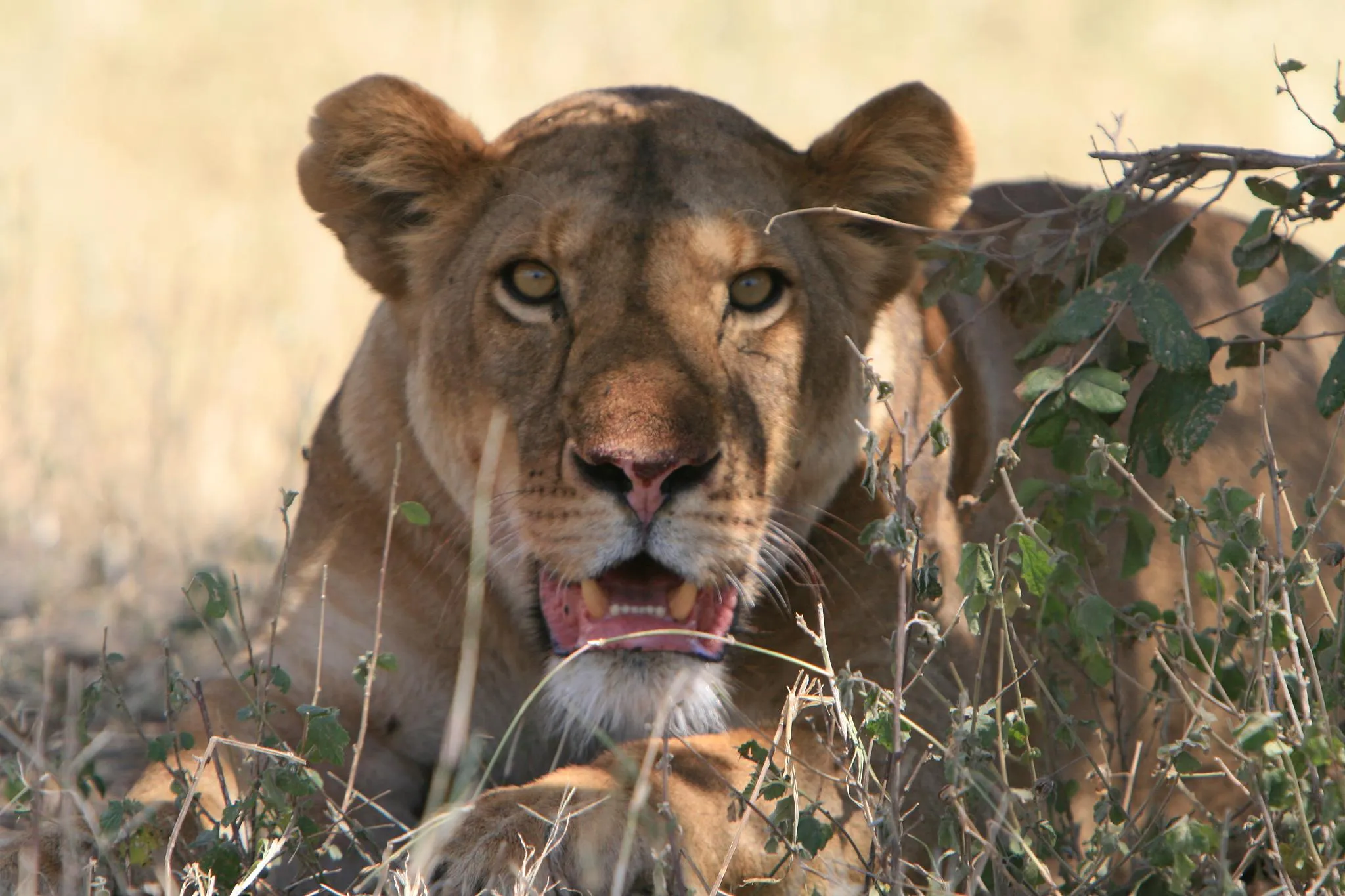
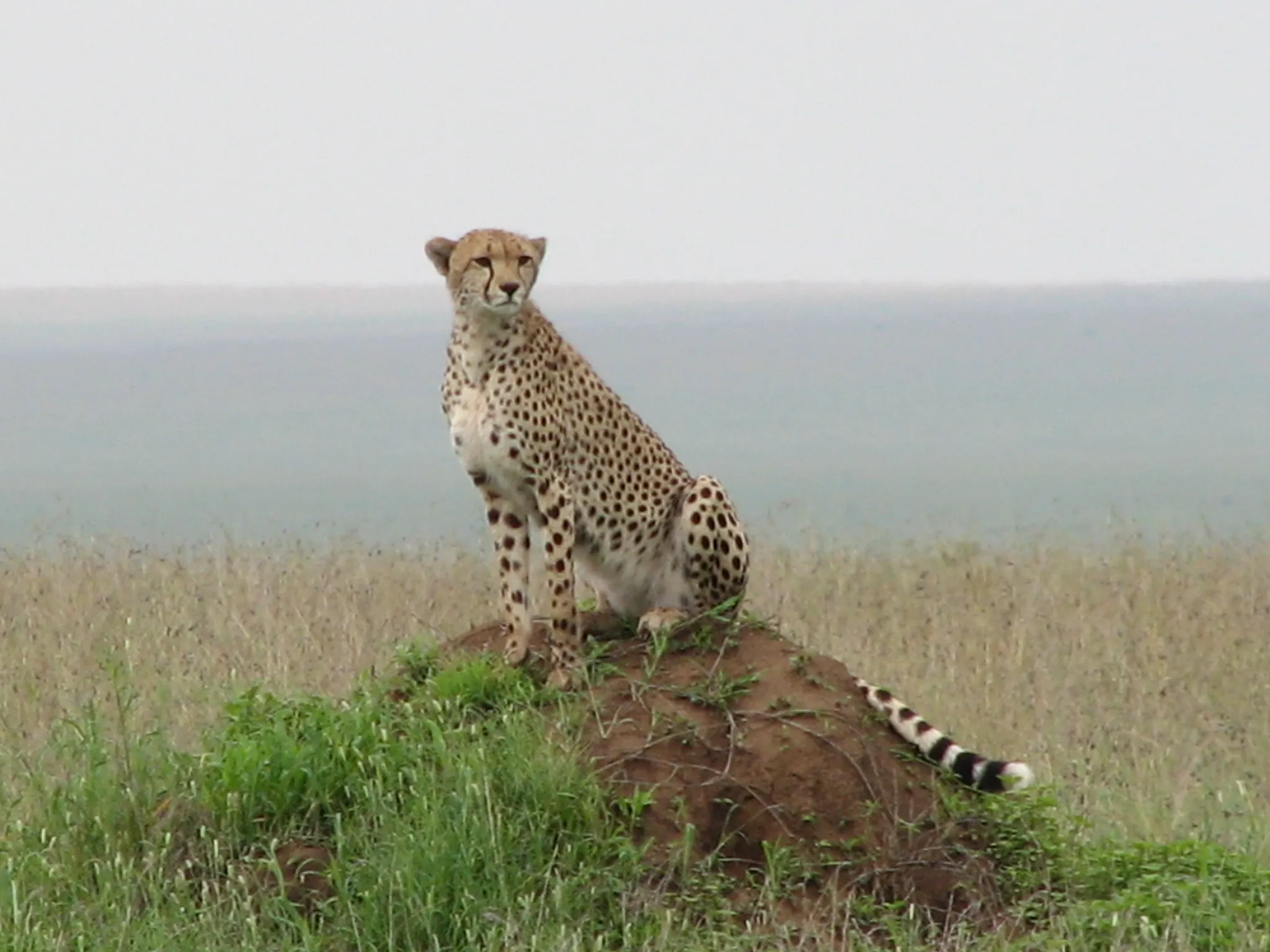
On cats specifically: the central Serengeti around Seronera has some of the best leopard sightings in Tanzania. They use the sausage trees along the river as resting spots, and a good guide knows which trees to check. Cheetah are easier to find on the open southern plains where the short grass gives them nothing to hide behind. Lions are everywhere — but a coalition of males moving through tall golden grass at dusk is something else entirely.
Over 500 bird species. The carmine bee-eaters alone are worth a morning.
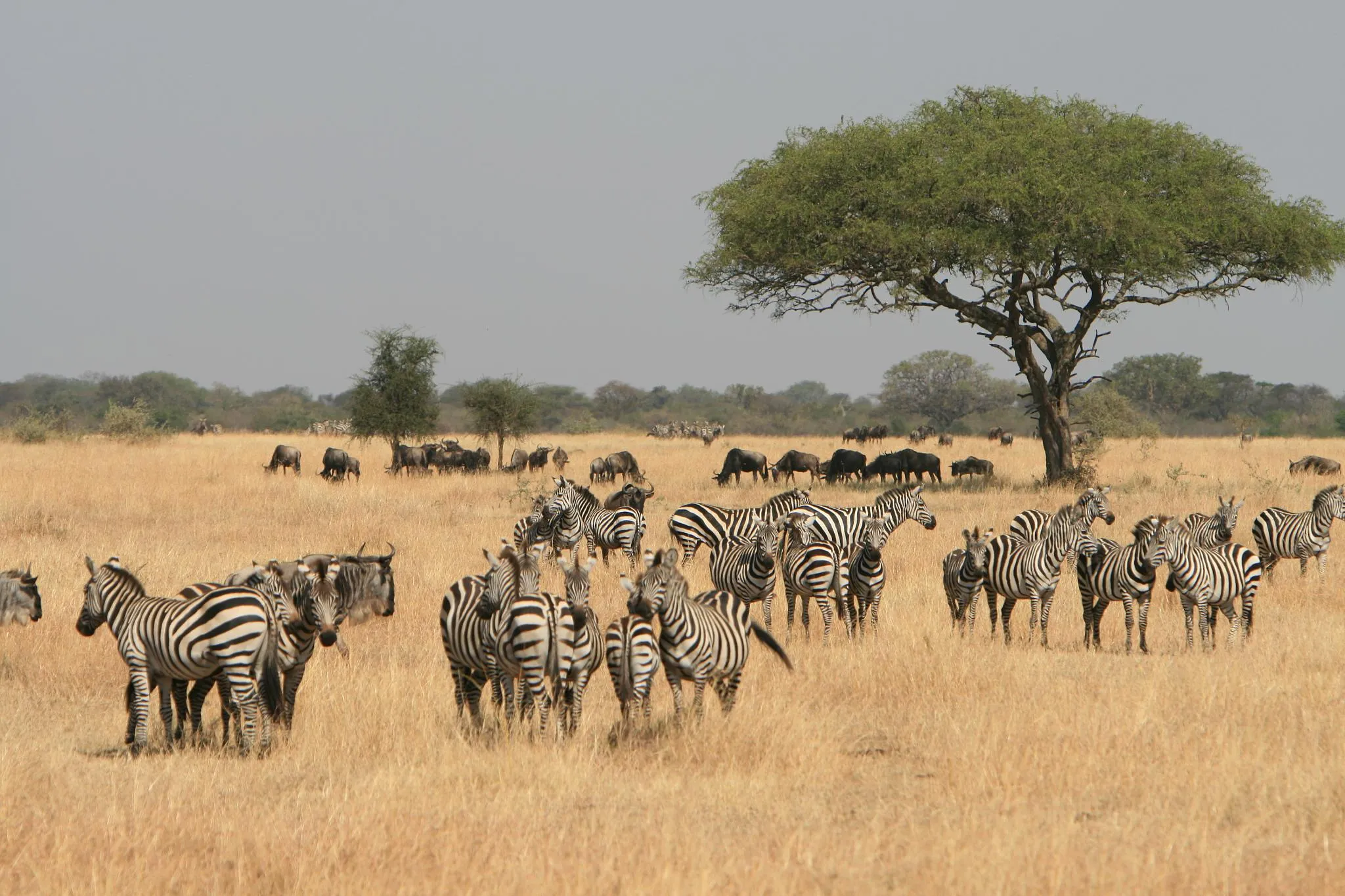
The Great Migration
1.5 million wildebeest. 300,000 zebra. 500,000 Thomson’s gazelle. Moving in a continuous loop across the Serengeti-Mara ecosystem, following rain and grass, driven by instinct older than memory.
It is not an event. It is a permanent condition. The herds are always somewhere in the system — the question is where, and what stage of the cycle they’re in.
December – March: The Southern Plains The short-grass plains around Ndutu fill with wildebeest for calving season. Up to 8,000 calves born per day at peak. Predators are everywhere, well-fed and bold. The light on the southern plains in January and February is extraordinary — flat, warm, and long.
April – May: The Move North The long rains turn the landscape green. The herds consolidate and begin moving northwest. Fewer tourists, lower prices, genuinely beautiful scenery. This is the most underrated time to go.
June – July: The Western Corridor The Grumeti River crossings. Smaller than the Mara, but the crocodiles here are ancient and enormous. The crossings are unpredictable — you wait, sometimes for hours, and then it happens all at once.
July – October: The Northern Serengeti The Mara River crossings. Thousands of animals throwing themselves into fast water because the grass on the other side is better. It is exactly as dramatic as it sounds. The northern Serengeti is also the most remote and least crowded part of the park.
November – December: The Return The short rains bring the herds back south. The cycle begins again.
Even outside the Migration corridors, the Serengeti is full of wildlife every single month of the year.
The Regions
Southern Serengeti / Ndutu Best for calving season, cheetah, and wide-open plains photography. Flat, unobstructed, extraordinary sky at sunset.
Central Serengeti / Seronera Year-round wildlife, outstanding leopard and lion sightings, the full cast of characters. Most accessible region and still exceptional. Where most itineraries are based — for good reason.
Western Corridor / Grumeti Best for June–July river crossings and green season landscapes. Less visited, more exclusive feel. Some very good camps here.
Northern Serengeti / Lamai Best for July–October Mara River crossings and serious photography. The longest drive from the gate, worth every kilometre. Vehicle density here is a fraction of what you find further south.
Activities
Game drives are the core of any Serengeti trip — morning drives especially, when the predators are still active and the light is low and warm. A full-day drive into a remote area with a bush breakfast somewhere quiet is worth doing at least once.
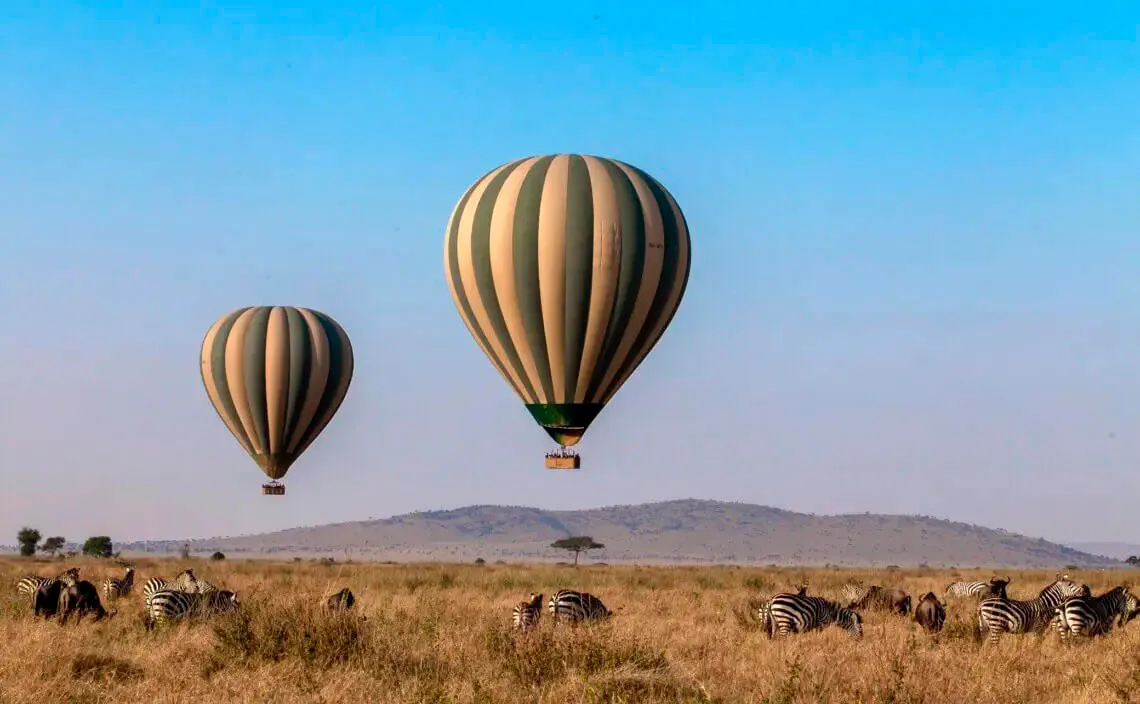
Hot air balloon safari at sunrise is not cheap and is absolutely worth it. An hour over the plains at first light, watching the herds move below you, followed by a champagne breakfast in the bush. Book it before you arrive — spaces fill early.
Walking safaris are available in specific areas with an armed ranger. Being on foot changes everything — the scale, the smell, the silence, the sudden awareness of being a small animal in a very large ecosystem.
Night drives are permitted in some conservancies bordering the park. This is when the leopards hunt, the civets emerge, and the hyenas come into their own.
Photography: The Serengeti is the finest wildlife photography destination in Africa. Golden hour is long, flat, and extraordinary. Bring more memory cards than you think you need.
When to Go
There is no bad time to visit the Serengeti. There are better times for specific things.
January – March: Calving season on the southern plains, highest predator density, exceptional light. Our top recommendation for photographers and first-time visitors.
April – May: Green season, lush landscapes, very few vehicles, lower rates. Seriously underrated.
June – October: Dry season, river crossings, peak season in the north. Outstanding but crowded at the Mara River during August.
November – December: Short rains, herds returning south, transitional and interesting. Good value.
If you’re not chasing a specific Migration crossing, January through March in the south is often the most rewarding month-for-month — and the lodges are quieter than the July–October rush in the north.
Getting There
Most visitors fly into Seronera Airstrip in central Serengeti, or Kogatende in the north for the Mara River region. Both are a short flight from Arusha or Kilimanjaro International Airport.
Driving from Arusha through the Ngorongoro highlands is worth doing at least one direction — the approach through the crater rim and down onto the plains is an experience on its own. Count on 7–8 hours.
We handle all logistics: flights, camp bookings, transfers, guide arrangements. You arrive at the airstrip. Someone is there.
Plan Your Serengeti Safari
Every Serengeti trip we build is different. The right region, the right camps, the right time of year for what you actually want to see — that takes a conversation, not a standard package pulled from a shelf.
Tell us when you want to go, what matters most to you, and how long you have. We’ll build something around that.