8 Days on the Lemosho Route – Mount Kilimanjaro
8 Days on the Lemosho Route – Mount Kilimanjaro
If you are going to climb Kilimanjaro once, the Lemosho route is the one to do it on.
It approaches from the west through a remote section of forest that sees a fraction of the traffic on the Machame or Marangu routes. The western approach traverses the full length of the Shira Plateau — one of the great high-altitude landscapes in Africa — before joining the Southern Circuit above Lava Tower. Eight days allows the body to adapt properly, following the principle that has always governed high-altitude mountaineering: climb high, sleep low, repeat.
The result is a summit success rate that consistently sits above 90% for fit, well-prepared climbers on this schedule. That number is not marketing. It reflects what the extra acclimatization day at Moir Hut and the longer approach across Shira actually do to your body’s ability to function at 5,895 metres.
The climb is non-technical. No ropes, no specialist equipment beyond layered clothing and broken-in boots. What gets you to Uhuru Peak is pace, hydration, and the discipline to go slower than feels necessary on the early days.
Day 1 – Londorossi Gate → Mti Mkubwa Camp
The drive from Arusha to Londorossi Gate takes roughly four hours, heading west toward the remote side of the mountain. This is where Lemosho separates itself from the busier routes — the trail from Londorossi enters a section of montane rainforest that feels genuinely wild. Colobus monkeys, birdsong, the smell of wet earth and moss.
Mti Mkubwa — Big Tree Camp — sits at 2,650 metres inside the forest. The name is accurate: the trees here are enormous, draped in lichen. A short first day by design. Legs fresh, bodies beginning to respond to the altitude.
Overnight: Mti Mkubwa Camp (2,650m). Dinner and all meals from here.
Day 2 – Mti Mkubwa → Shira 1 Camp
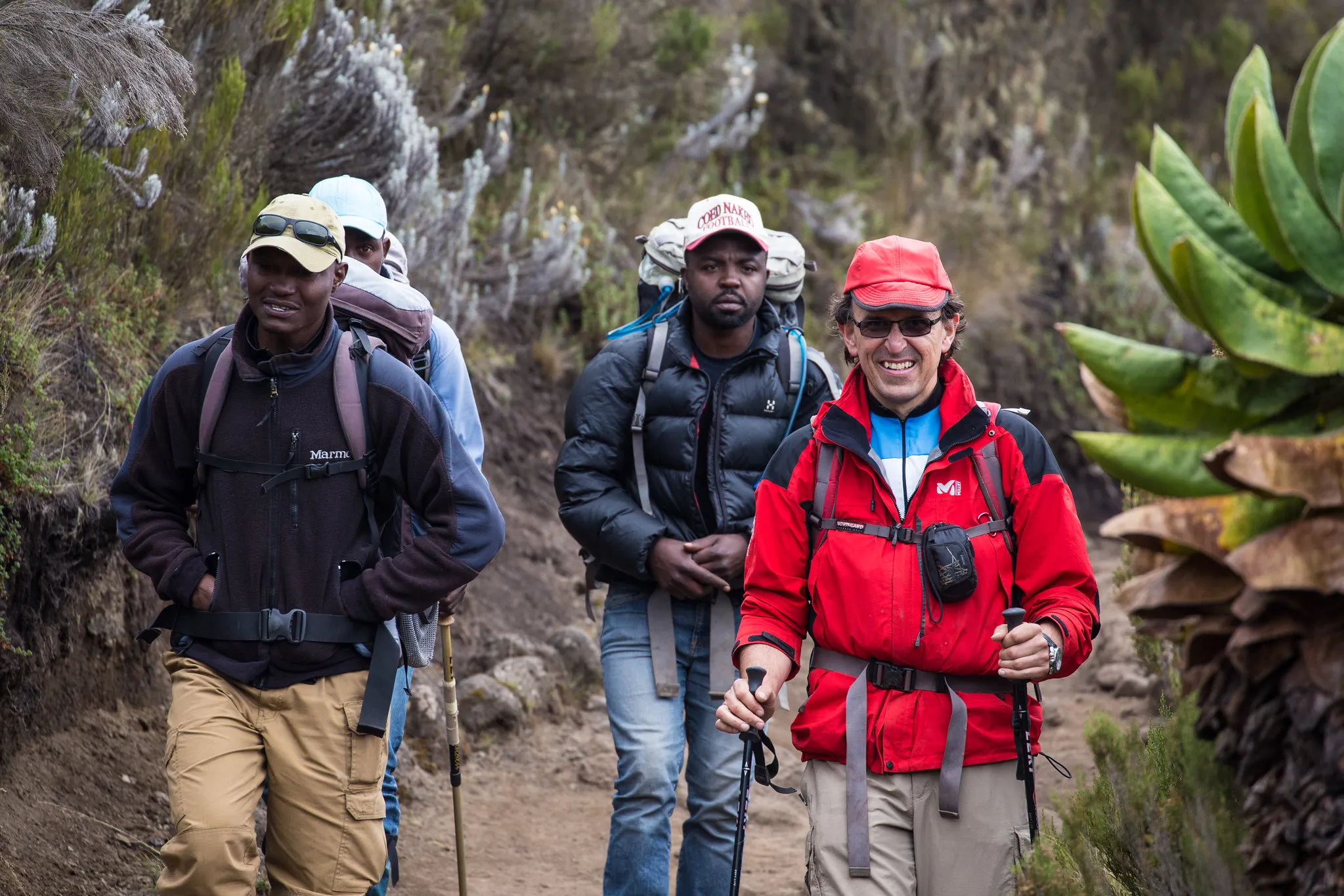
The forest thins and gives way to heath and moorland as the trail climbs through the morning. The vegetation shifts visibly — giant heather, everlasting flowers, the first open views back toward the plains below.
Shira 1 sits at the western edge of the Shira Plateau at 3,500 metres. The plateau itself was once a volcanic caldera — what remains is a wide, flat expanse of moorland, one of the most distinctive landscapes on any Kilimanjaro route. On a clear afternoon the scale of what you are standing on becomes apparent.
Overnight: Shira 1 Camp (3,500m).
Day 3 – Shira 1 → Moir Hut
The acclimatization day that sets the Lemosho 8-day apart.
Rather than pushing directly to Shira 2 and the main Southern Circuit, you spend a second day on the plateau, crossing to Moir Hut at 4,200 metres. The extra altitude exposure — sleeping 700 metres higher than the previous night — is where the success rate advantage is built.
The walk crosses the full breadth of the Shira Plateau, passing Shira Cathedral, a dramatic series of volcanic columns on the northern edge. The terrain here is open, windswept, and unlike anything on the lower mountain. Elephant and buffalo occasionally cross the plateau — Lemosho’s western approach sits inside a wildlife corridor.
Moir Hut is a small, quiet camp. Few groups reach this far north on the plateau. This is one of the most isolated nights on any Kilimanjaro route.
Overnight: Moir Hut (4,200m).
Day 4 – Moir Hut → Lava Tower → Barranco Camp
The route descends from Moir Hut to join the main Southern Circuit, climbing again to Lava Tower at 4,600 metres before dropping to Barranco Camp at 3,900 metres. Another classic climb-high, sleep-low day — the body absorbs the altitude at Lava Tower and recovers overnight at the lower camp.
Lava Tower is a 300-metre volcanic plug that rises abruptly from the scree. Lunch here in the thin air, then the descent into the Barranco Valley — dramatic, rocky, the great southern glaciers coming into view for the first time.
Barranco Camp is one of the most scenic on the mountain. The wall rises directly above you, and by now the summit ice cap is visible against the sky.
Overnight: Barranco Camp (3,900m).
Day 5 – Barranco Camp → Barranco Wall → Karanga Camp
The Barranco Wall is the most talked-about section of the Southern Circuit — a 300-metre rock scramble that requires hands and feet and looks considerably more difficult from below than it is. Your guide leads. The porters pass you. The exposure is real but the holds are good throughout.
The top of the wall is a turning point in the climb, psychologically as much as physically. The worst terrain is behind you. The route traverses into Karanga Valley, crossing a series of ridges before the final climb to Karanga Camp.
A shorter day — four to five hours — timed deliberately. Rest, food, hydration. The body needs this more than another hour of walking at this altitude.
Overnight: Karanga Camp (3,960m).
Day 6 – Karanga Camp → Barafu Camp
The final camp before the summit. The trail from Karanga climbs through increasingly barren terrain — scree, volcanic rock, nothing growing above 4,200 metres. Barafu sits on a ridge at 4,670 metres with unobstructed views in every direction: the summit above, the plains of Tanzania far below.
Arrive by early afternoon. The remainder of the day is for eating as much as possible, hydrating carefully, and sleeping if the altitude allows. Your guide walks you through the summit plan: wake at 11pm, depart shortly after midnight.
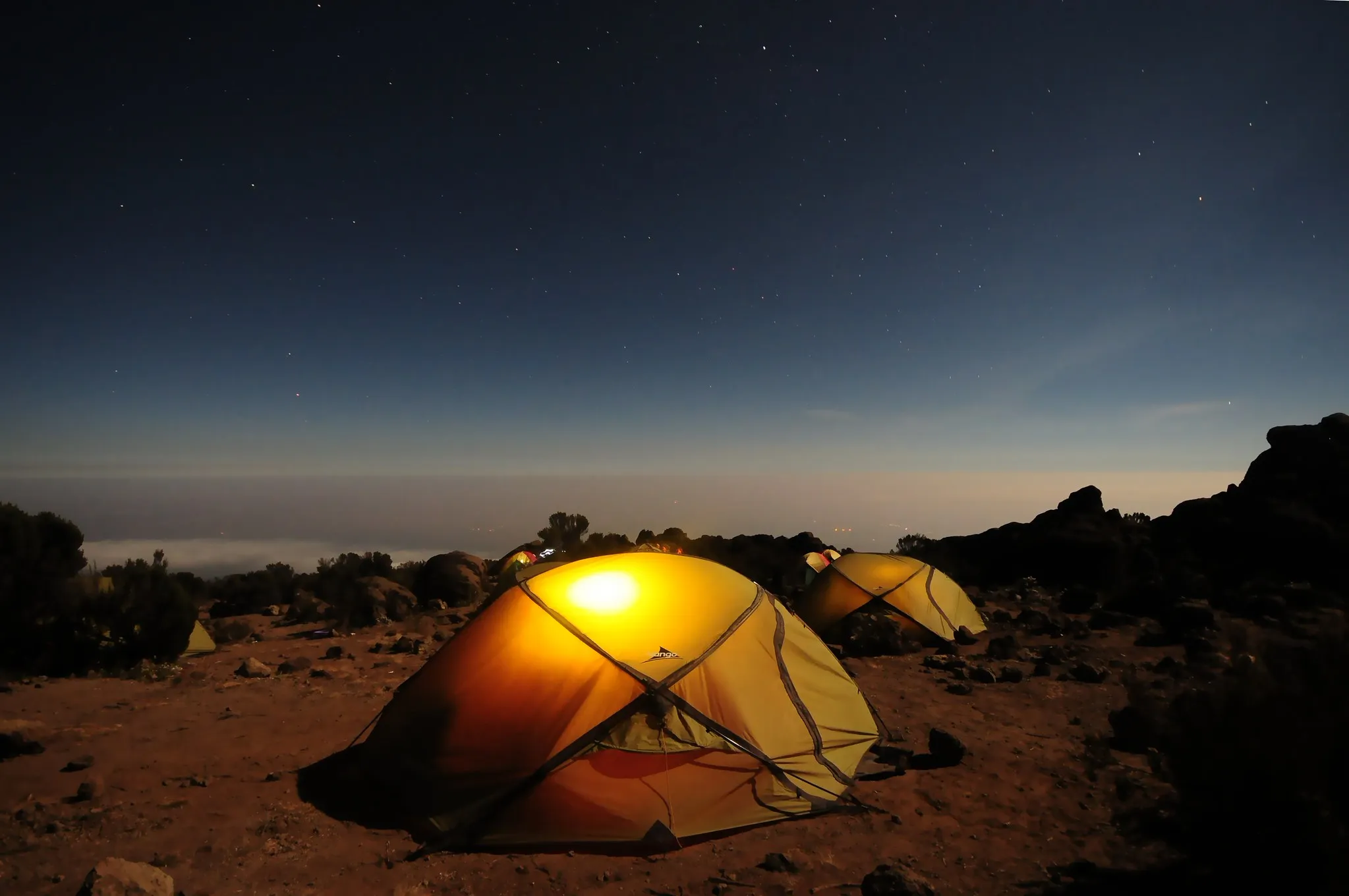
Temperatures at Barafu drop to -10°C or below overnight. Every layer you brought goes on before you leave the tent.
Overnight: Barafu Camp (4,670m).
Day 7 – Barafu Camp → Uhuru Peak → Mweka Camp
The summit push starts in darkness and silence, headtorches picking out the trail through loose scree and patches of ice. The pace is deliberately slow — pole pole. At this altitude, slow is the only speed that works.
Stella Point on the crater rim takes five to seven hours from Barafu. Most groups arrive at or just after sunrise — the moment the clouds below turn orange and the shadow of Kilimanjaro stretches west across the plateau. The crater glaciers, ancient and retreating, stand above you.
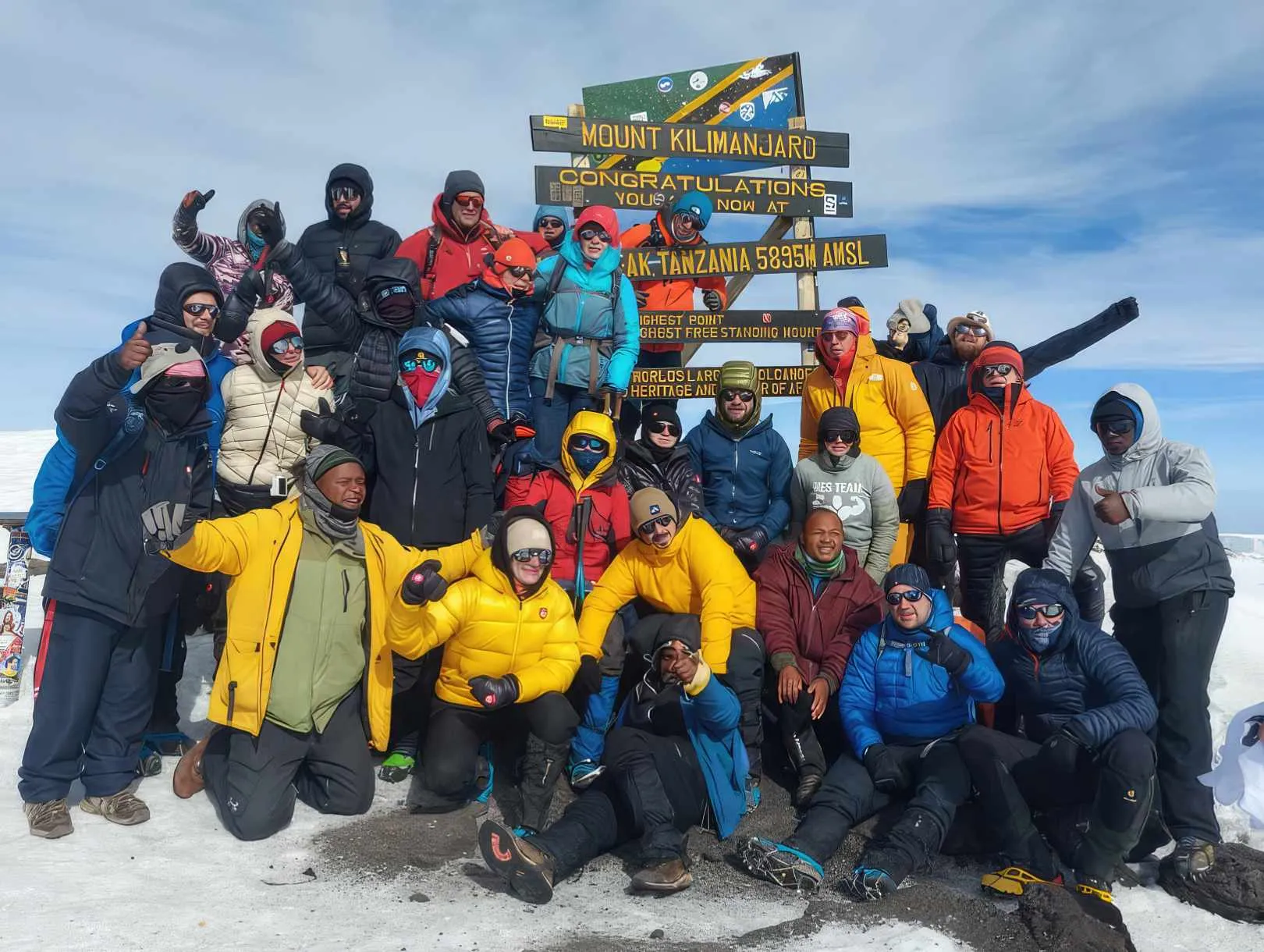
Uhuru Peak is forty-five minutes further along the crater rim at 5,895 metres — the highest point in Africa. The summit sign, the photographs, a few minutes to register what it took to get here. Then the descent begins. Altitude is not a place to linger.
The descent to Mweka Camp at 3,100 metres takes three to four hours. The legs know what they have done. Mweka feels warm.
Overnight: Mweka Camp (3,100m).
Day 8 – Mweka Camp → Mweka Gate → Arusha
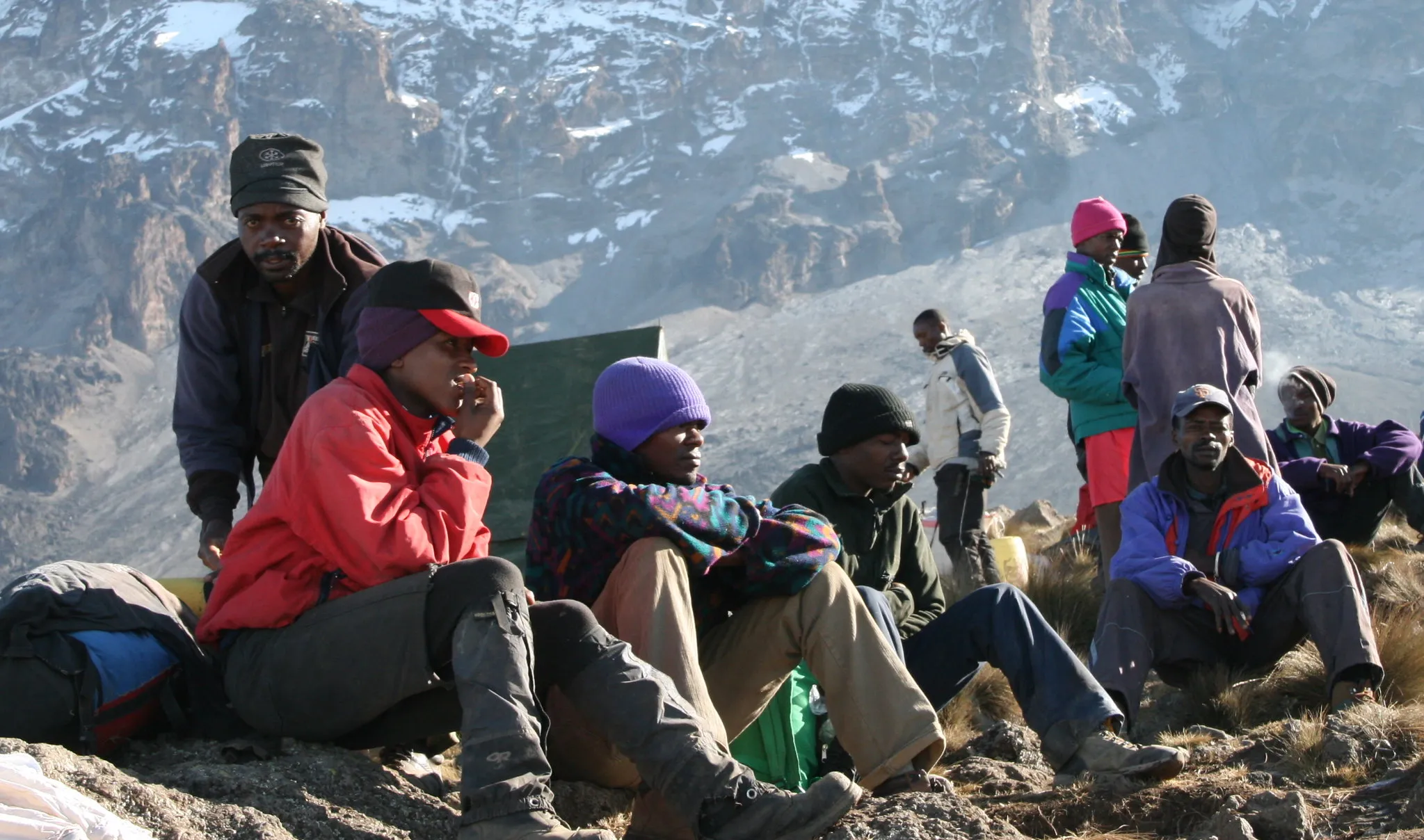
A final two to three hours through the rainforest to Mweka Gate at 1,640 metres. Summit certificates are collected at the gate. The crew farewell and tipping happens here — these are the people who carried your equipment, cooked your food, and kept you safe for eight days.
Transfer back to Arusha. The drive gives you time to sit with it.
Find more information about Climbing Mount Kilimanjaro in our Kilimanjaro Climbing Guide →.
| Duration | 8 days / 7 nights on the mountain, plus pre-climb night in Arusha |
| Route | Lemosho (western approach) |
| Summit | Uhuru Peak, 5,895m |
| Price | From $4,500 per person |
| Level | Mid-range / strenuous |
| Group size | 2–8 (private) |
| Best time | January–March, June–October |
| Crew | Lead guide, assistant guide, cook, porters (ratio 1:3 minimum) |
| Pre-climb accommodation | Parrot Hotel, Arusha (or similar) |
| Not suited for | Anyone without reasonable baseline fitness; those unwilling to commit to 8 days |
What’s Included
- Experienced licensed guides and a full porter team
- All camping equipment — sleeping tents, dining tent, toilet tent
- All meals on the mountain and purified drinking water
- National park fees and rescue fund levy
- Supplemental oxygen and pulse oximeters
- Transfers between Arusha and the park gate
What’s Not Included
- International flights
- Visa fees for entry into the safari country
- Travel insurance / medical evacuation
- Tips for guides, drivers, camp staff, and porters
- Alcoholic drinks, soft drinks, and premium beverages
- Optional activities not listed in the itinerary (e.g. horseback rides, fishing, dolphin tours, etc)
- Laundry, phone calls, and personal expenditures
- Vaccinations or malaria prophylaxis / medication
- Emergency medical evacuation / AMREF coverage
- Domestic flights (unless stated in the package)