7 Days on the Machame Route – Mount Kilimanjaro
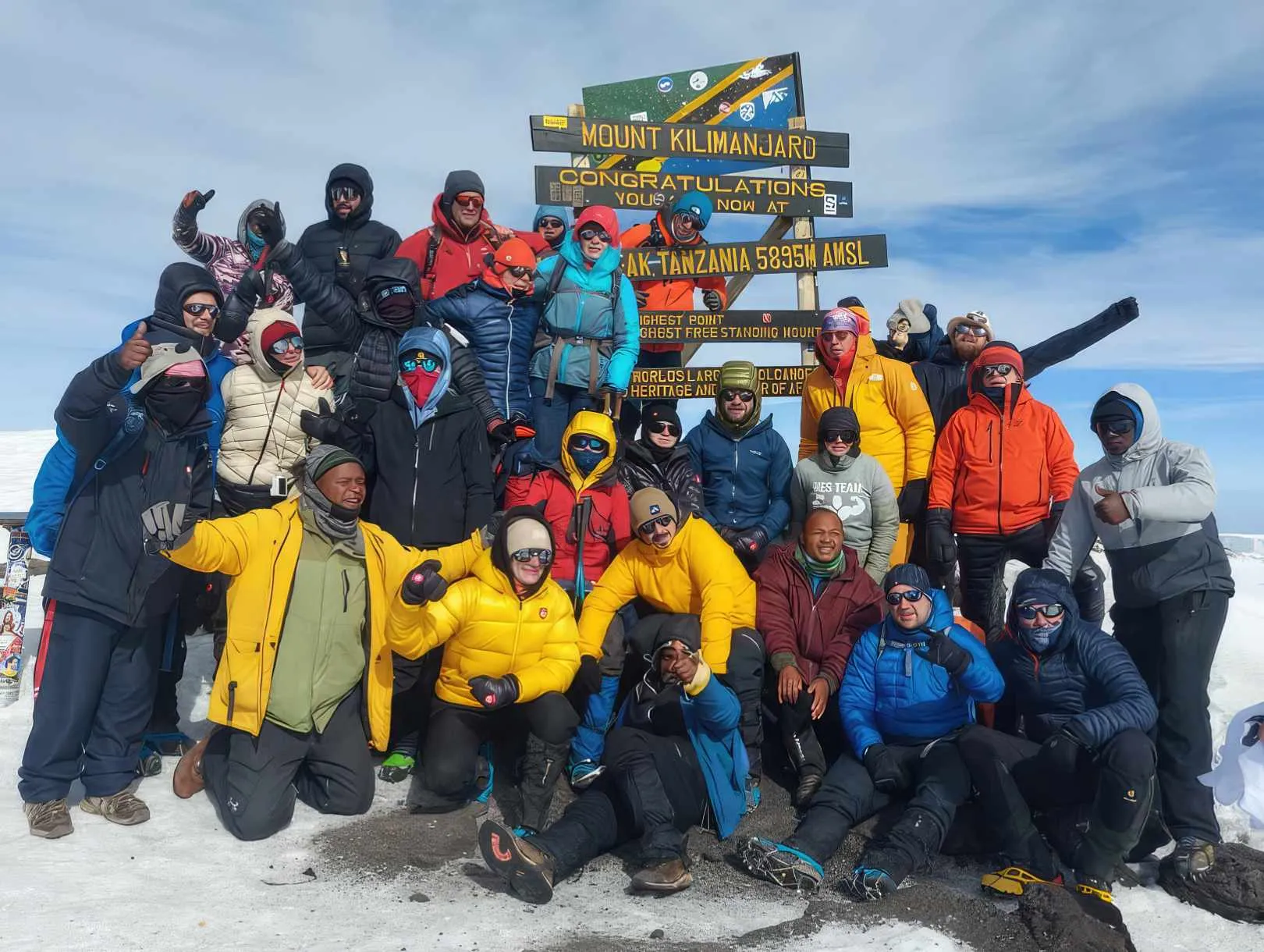
7 Days on the Machame Route – Mount Kilimanjaro
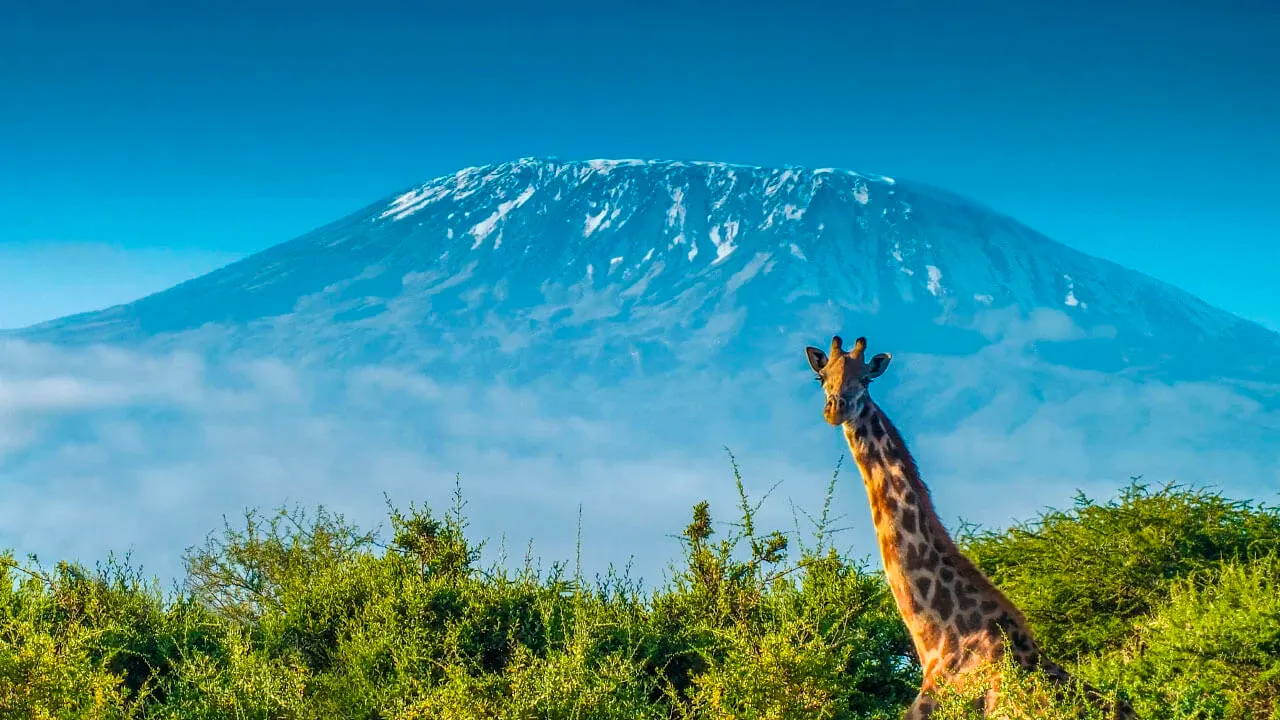
The Machame route earns its reputation. Known as the Whiskey Route for its relative difficulty compared to the gentler Marangu, it takes you through five distinct climate zones — rainforest, heath, moorland, alpine desert, and arctic summit — across seven days of steady, calculated ascent.
Seven days is the number that matters. The sixth night at Mweka Camp after summit push is not a luxury — it is the difference between a 60% and an 85% summit success rate. The extra acclimatization day at Karanga follows the cardinal rule of high-altitude trekking: climb high, sleep low. We do not offer a six-day Machame. If you want to reach Uhuru Peak, you do it properly.
The route approaches from the southwest, joining the Southern Circuit above Lava Tower before the famous Barranco Wall — a scramble that looks intimidating from below and feels earned from the top. From Barafu, the summit push starts around midnight. You reach Stella Point at the crater rim as the sun rises over the clouds below you.
At 5,895 metres, Uhuru Peak is the highest point in Africa. The climb is non-technical — no ropes, no specialist equipment — but altitude, cold, and sustained physical effort make this a serious undertaking. Fitness and the right pace are what get you there.
Day 1 – Moshi → Machame Gate → Machame Camp
Collected from your Moshi hotel in the morning and driven to Machame Gate at 1,800 metres. Registration, kit check, and your first meeting with the crew who will be with you for the next seven days.
The trail enters the rainforest immediately — dense, green, often wet underfoot. Five to six hours of walking through montane forest, the canopy closing overhead, moss on everything. Colobus monkeys are common in this section.
Machame Camp sits at 3,000 metres. First night on the mountain. Dinner in the mess tent, briefing from your guide on what tomorrow looks like.
Overnight: Machame Camp. All meals from today.
Day 2 – Machame Camp → Shira 2 Camp
The forest gives way to heath and moorland as you climb through the morning. The vegetation changes visibly with every few hundred metres of altitude — giant heather, lobelia, groundsel — the distinctive high-altitude flora of Kilimanjaro.
Shira Plateau opens ahead of you: a wide, flat volcanic caldera at around 3,800 metres. The scale of the mountain becomes clear from here. You push on to Shira 2 Camp at 3,900 metres rather than the lower Shira 1, banking altitude for the days ahead.
Six to seven hours of walking. Clear days give views back toward Moshi and, on the horizon, the Masai Steppe.
Overnight: Shira 2 Camp (3,900m).
Day 3 – Shira 2 → Lava Tower → Barranco Camp
The most important acclimatization day on the route.
You climb high — up to Lava Tower at 4,600 metres — for lunch, then descend to Barranco Camp at 3,900 metres for the night. The body responds to the altitude exposure at Lava Tower while you sleep lower. This is why seven days works.
The terrain above Shira becomes rockier, more exposed, the vegetation sparser. Lava Tower itself is a volcanic plug, dramatic against the sky. Some people feel the altitude here — headache, reduced appetite. Your guide monitors this throughout.
The descent to Barranco takes about two hours through the Barranco Valley, arriving at one of the most scenic camps on the mountain, with the Barranco Wall ahead of you.
Overnight: Barranco Camp (3,900m).
Day 4 – Barranco Camp → Barranco Wall → Karanga Camp
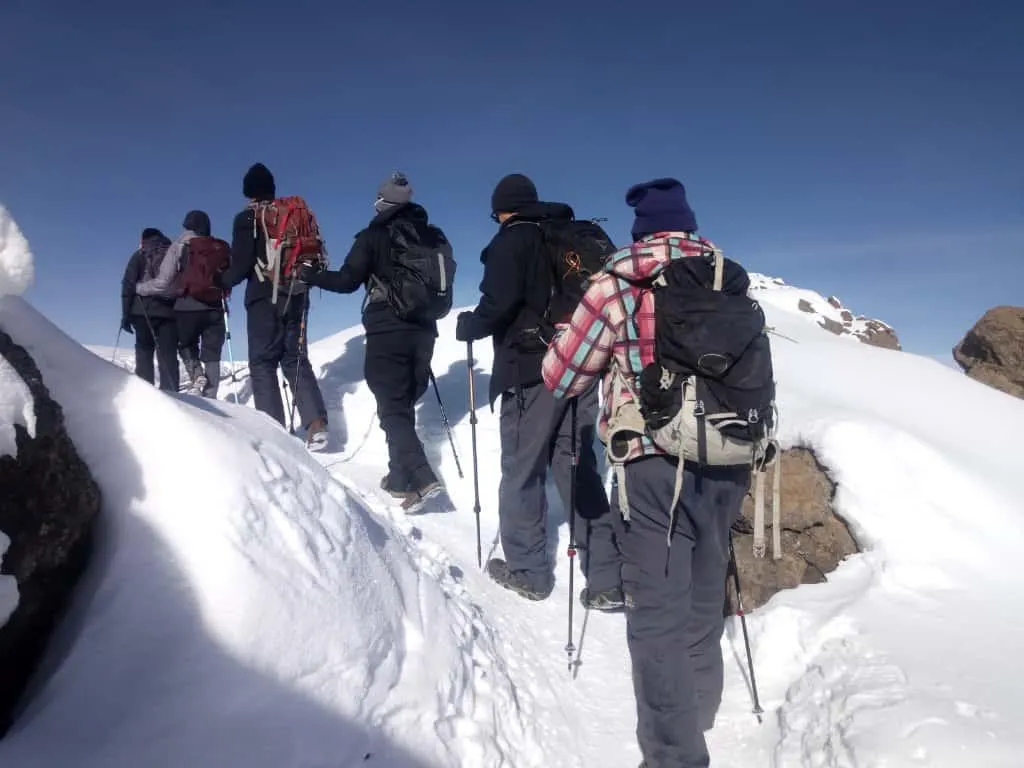
The Barranco Wall stops everyone in their tracks the first time they see it — a near-vertical rock face rising 300 metres above the camp. It looks technical. It is not. It is a hands-and-feet scramble with good holds throughout, your porter likely carrying your bag past you with a cheerfulness that is both impressive and slightly humbling.
The top of the wall is one of the best moments on the route. The views open up across the southern glaciers, and the hardest physical section of the lower mountain is behind you.
From the wall you traverse the Southern Circuit, dropping briefly into Karanga Valley before the final climb to Karanga Camp at 4,000 metres. A shorter day — four to five hours — deliberately so. Rest matters now.
Overnight: Karanga Camp (4,000m).
Day 5 – Karanga Camp → Barafu Camp
The final camp before summit. The trail from Karanga climbs steadily through increasingly barren terrain — loose scree, thin air, nothing growing above 4,200 metres. Barafu Camp at 4,673 metres sits on a rocky ridge with views in every direction.
You arrive by early afternoon. The rest of the day is for eating, hydrating, sleeping if possible, and preparing your summit kit. Your guide will walk you through the night’s plan: wake-up at 11pm, summit push begins around midnight.
Cold at this altitude is serious. Temperatures at Barafu regularly drop to -10°C or below at night. Layers, gloves, a balaclava.
Overnight: Barafu Camp (4,673m).
Day 6 – Barafu Camp → Uhuru Peak → Mweka Camp
The summit push.
You leave Barafu in darkness, headtorches on, the mountain silent except for wind and footsteps. The pace is slow — pole pole, as every guide on the mountain says. Slow is what works at this altitude.
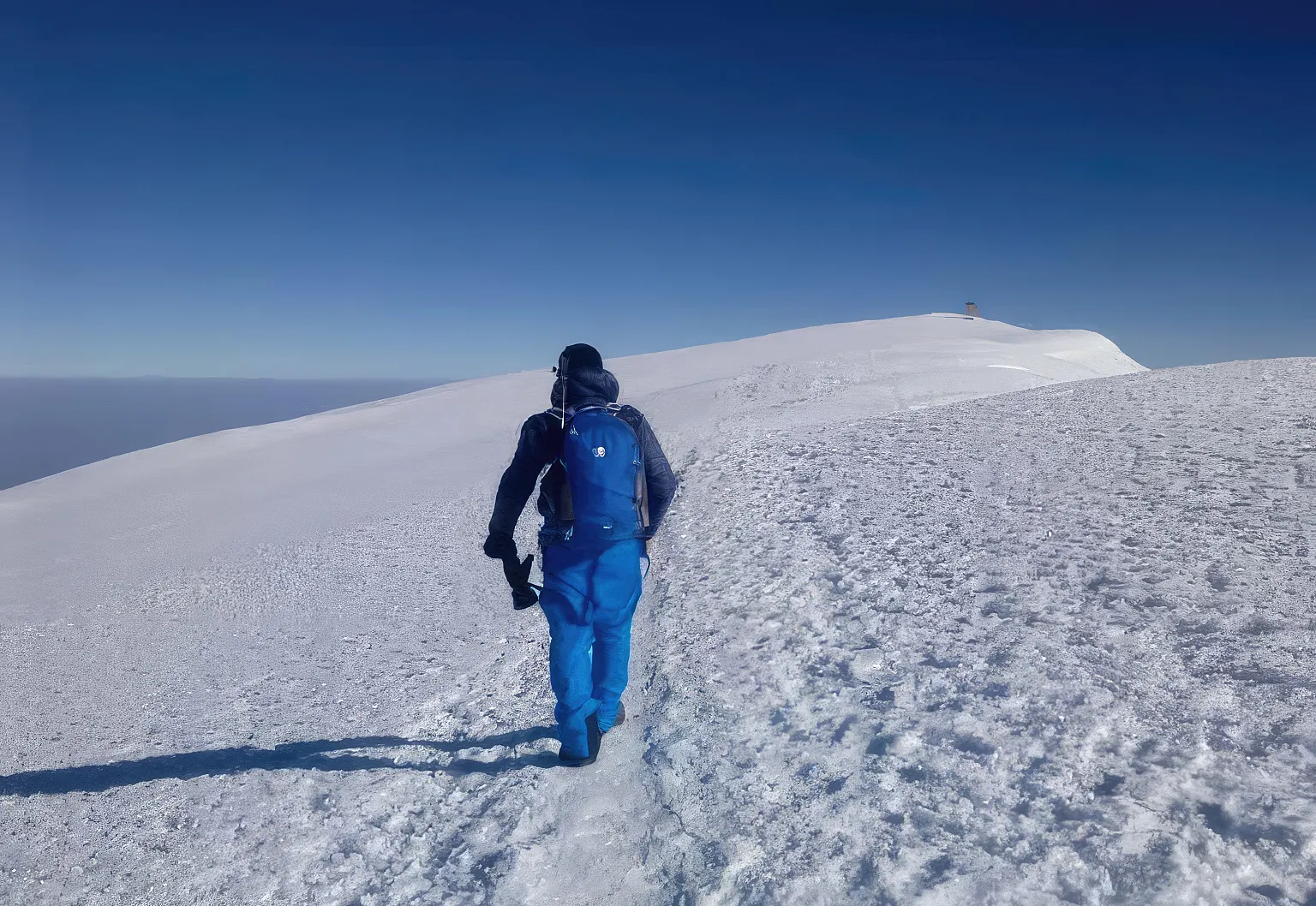
The trail climbs steeply through loose scree and ice. Stella Point on the crater rim takes five to seven hours from Barafu, arriving typically at or just after sunrise. The crater glaciers, the curve of the Earth, the clouds below — this is what the previous five days were building toward.
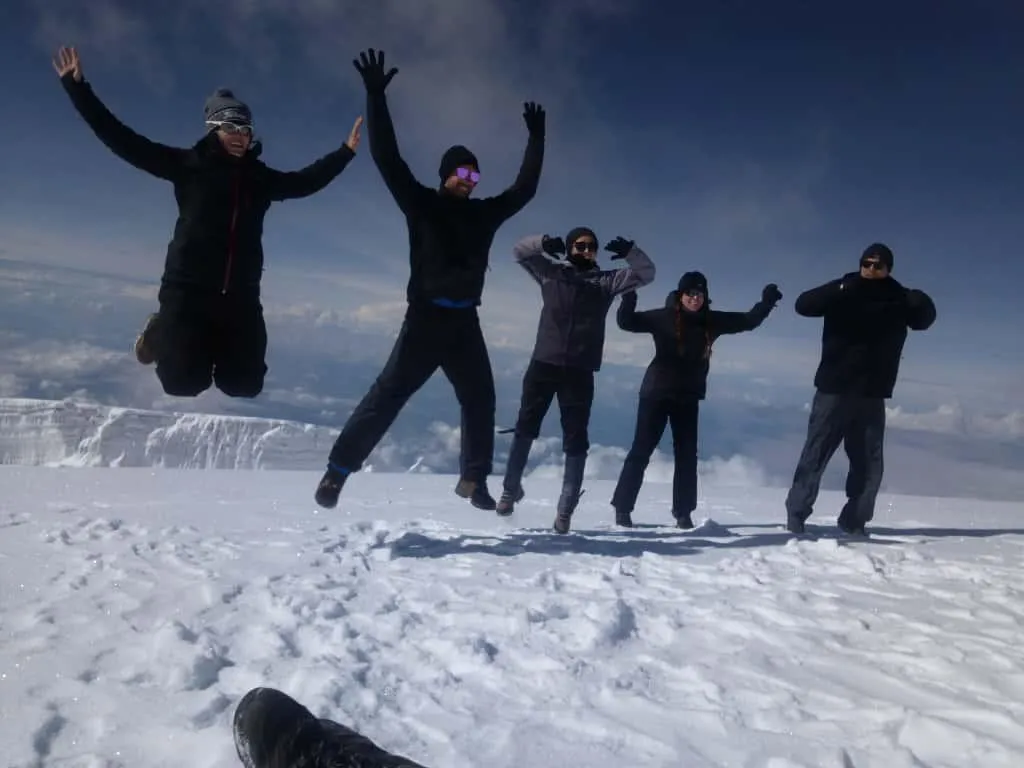
Uhuru Peak is another forty-five minutes across the crater rim from Stella Point. 5,895 metres. Photographs, a moment to take it in, then the descent begins immediately — altitude is not a place to linger.
The descent to Mweka Camp takes three to four hours. Legs are tired. The camp at 3,100 metres feels warm compared to where you have been.
Overnight: Mweka Camp (3,100m).
Day 7 – Mweka Camp → Mweka Gate → Moshi
A final two to three hours through the rainforest to Mweka Gate at 1,640 metres. Certificate collection at the gate. Farewells with the crew — tipping happens here.
Transfer back to Moshi. Lunch, a hot shower, and the particular tiredness of having done something that required everything you had.
Find more information about Climbing Mount Kilimanjaro in our Kilimanjaro Climbing Guide →.
| Duration | 7 days / 6 nights on the mountain, plus pre-climb night in Moshi |
| Route | Machame (southwest approach) |
| Summit | Uhuru Peak, 5,895m |
| Price | From $2,800 per person |
| Level | Mid-range / strenuous |
| Group size | 2–8 (private) |
| Best time | January–March, June–October |
| Crew | Lead guide, assistant guide, cook, porters (ratio 1:3 minimum) |
| Pre-climb accommodation | Weru Weru River Lodge, Moshi (or similar) |
| Not suited for | Anyone without reasonable baseline fitness; those unwilling to commit to 7 days |
What’s Included
- Experienced licensed guides and a full porter team
- All camping equipment — sleeping tents, dining tent, toilet tent
- All meals on the mountain and purified drinking water
- National park fees and rescue fund levy
- Supplemental oxygen and pulse oximeters
- Transfers between Arusha and the park gate
What’s Not Included
- International flights
- Visa fees for entry into the safari country
- Travel insurance / medical evacuation
- Tips for guides, drivers, camp staff, and porters
- Alcoholic drinks, soft drinks, and premium beverages
- Optional activities not listed in the itinerary (e.g. horseback rides, fishing, dolphin tours, etc)
- Laundry, phone calls, and personal expenditures
- Vaccinations or malaria prophylaxis / medication
- Emergency medical evacuation / AMREF coverage
- Domestic flights (unless stated in the package)