7 Days — Great Migration Tanzania Safari — Mid-Range
7 Days — Great Migration Tanzania Safari — Mid-Range
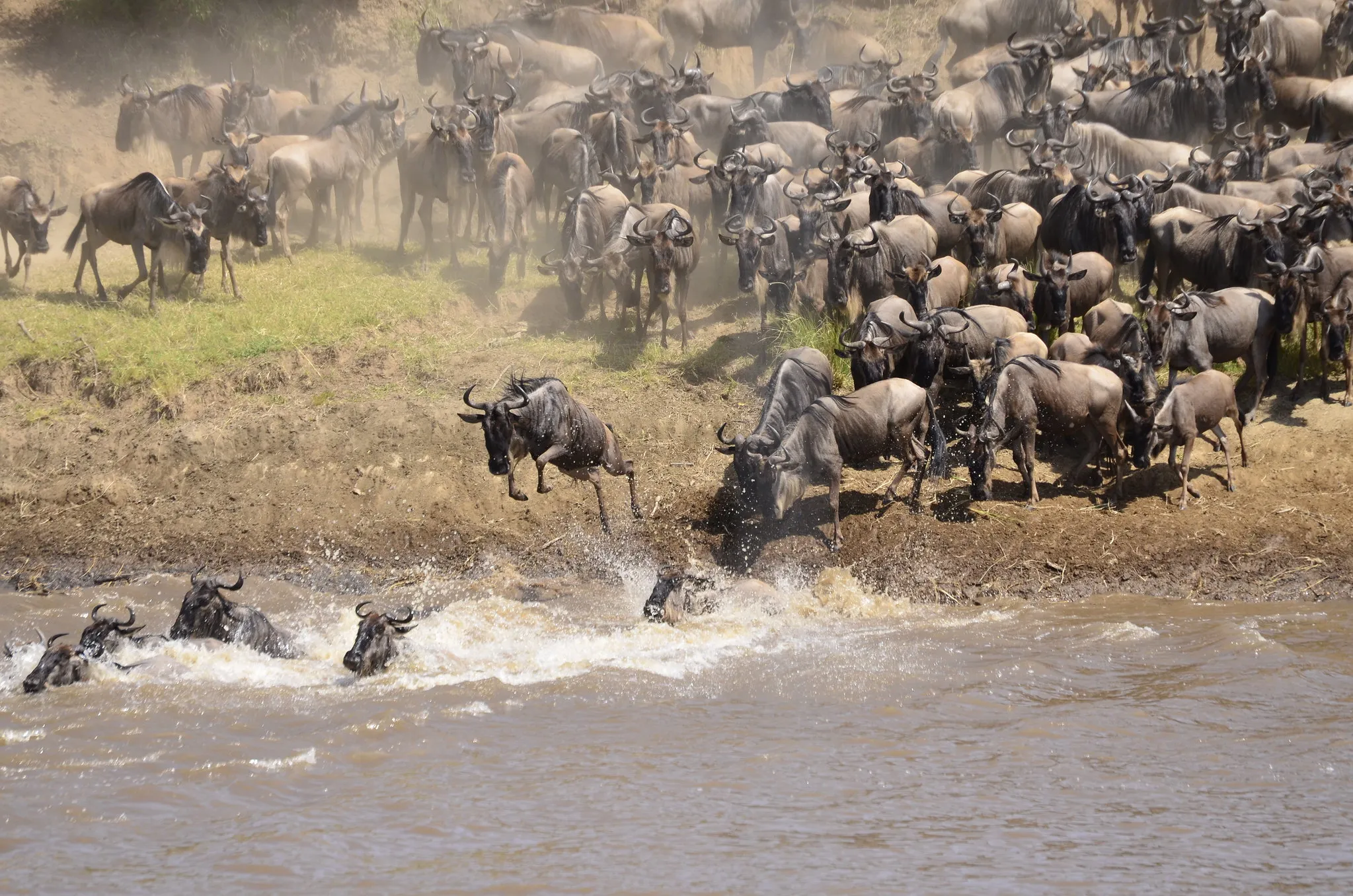
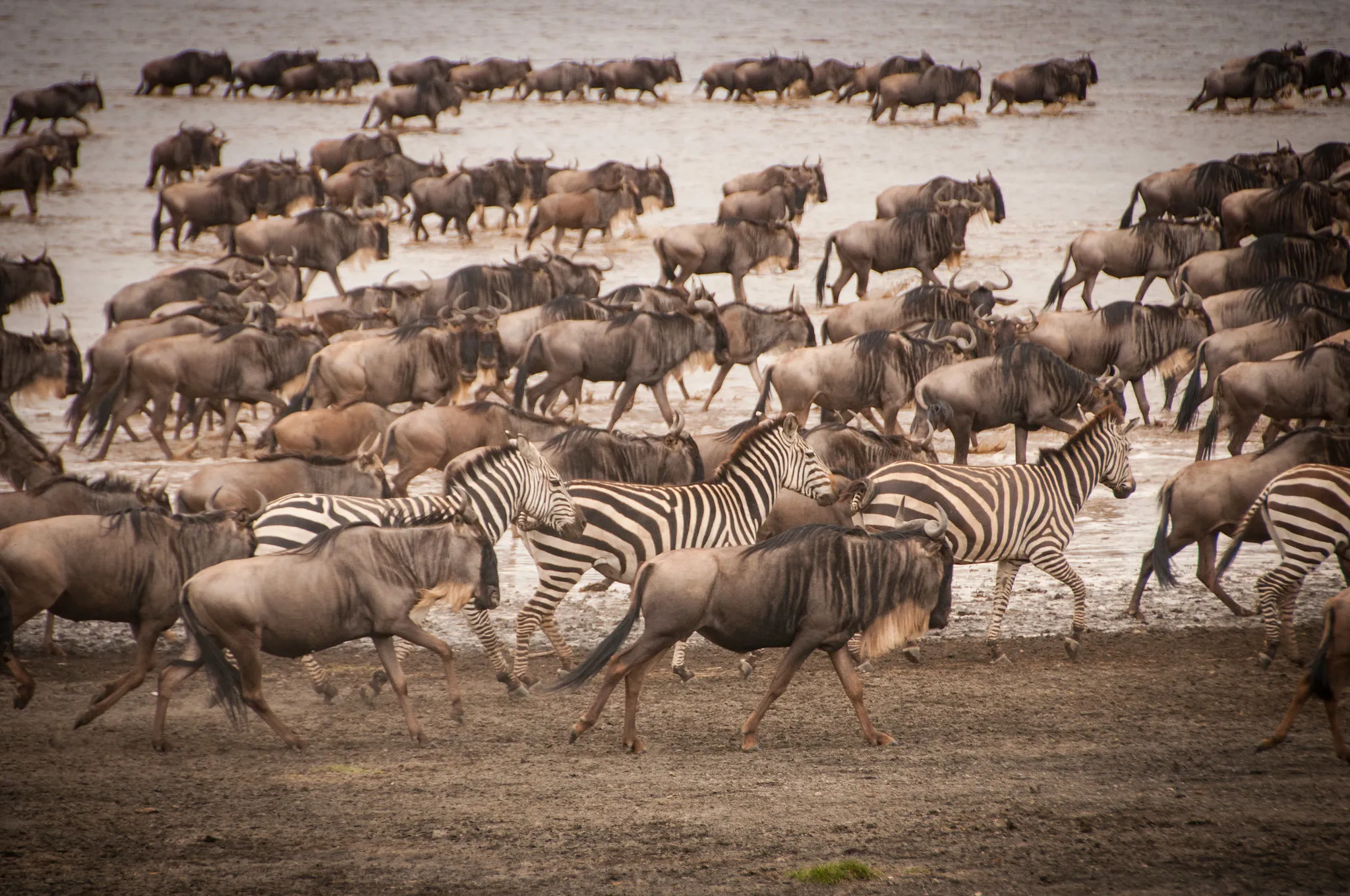
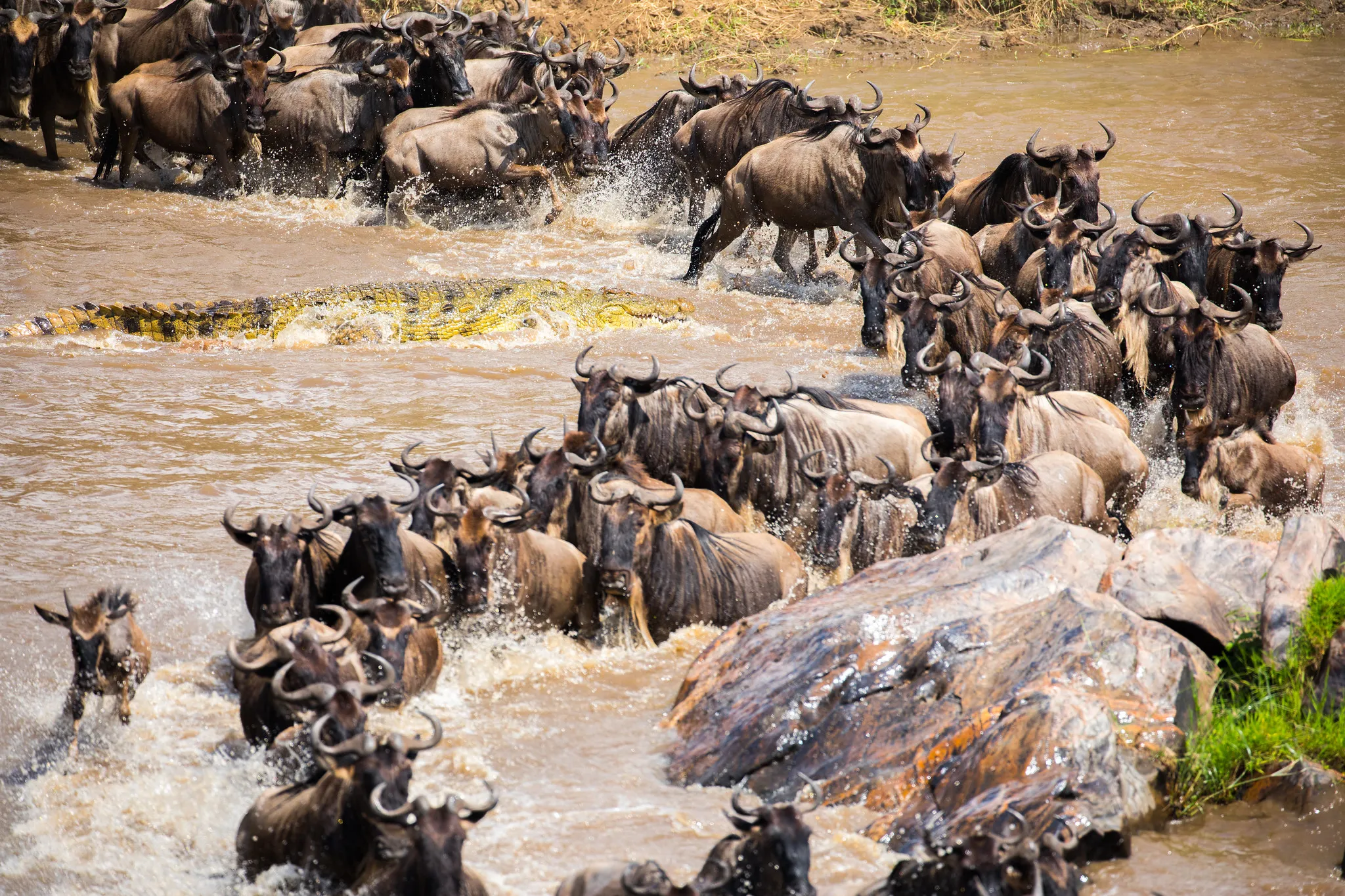
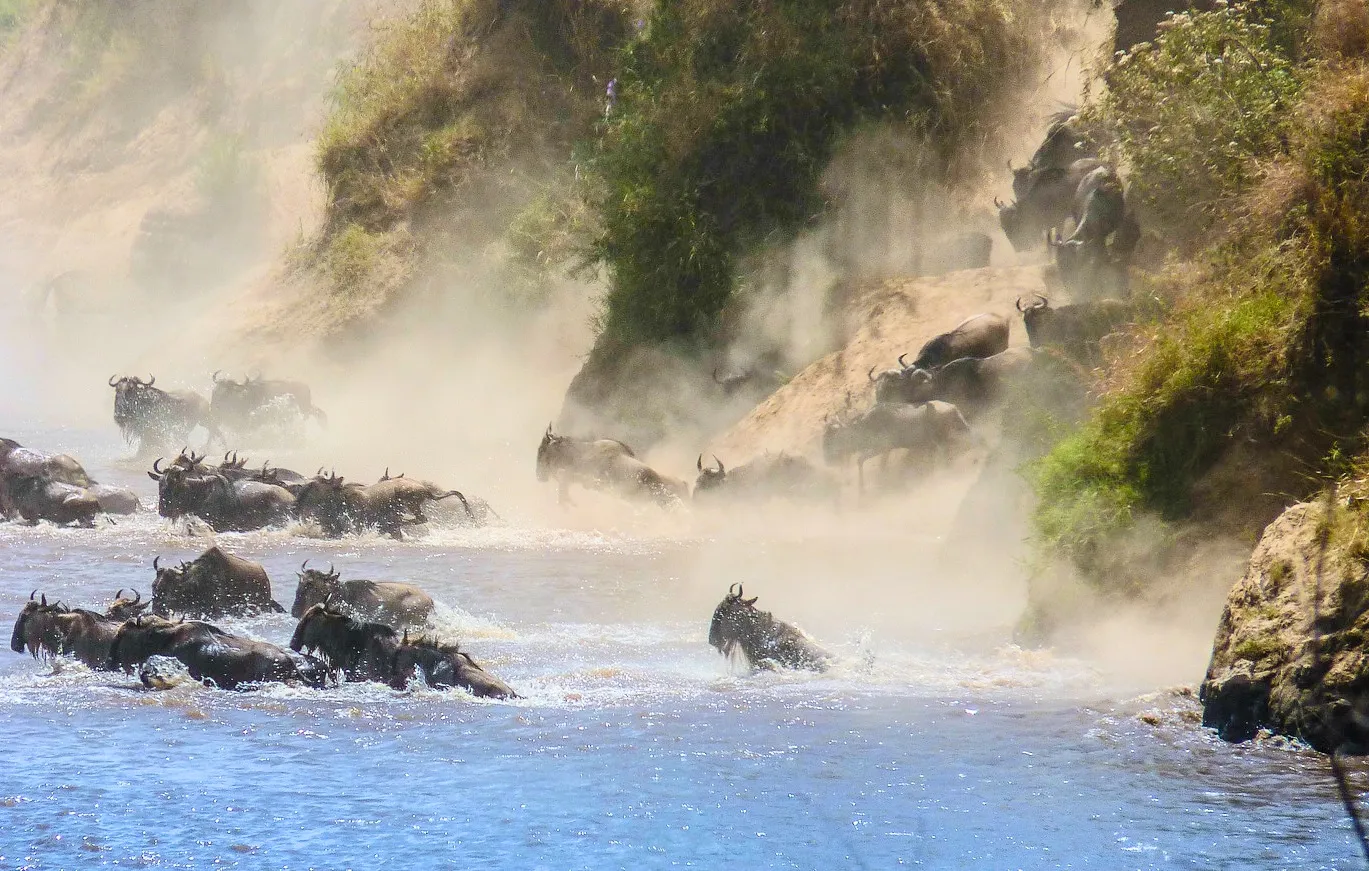
The Great Migration doesn’t follow a fixed schedule. More than 1.5 million wildebeest move continuously through the Serengeti ecosystem in a loop that shifts with the rains — calving in the south between December and March, pushing north through the central plains in the middle of the year, crossing the Mara River between July and October, and returning south again. They’re always somewhere. The job is to be in the right place when you arrive.
This seven-day itinerary is built around that logic. Three parks, flexible routing, and guides who track the herds week by week. You see the migration in whatever phase it’s in when you’re there — and every phase has something worth travelling for.
Day 1 – Arrival in Arusha
You land at Kilimanjaro International Airport. Our team meets you, transfers you to your hotel in Arusha, and sits down with you for a proper safari briefing — where the herds are right now, what to expect, how the next seven days will unfold.
Rest. The bush starts tomorrow.
Day 2 – Arusha → Tarangire National Park
A 2.5-hour drive south to Tarangire and your first game drive. The park announces itself with baobabs and then the elephants — in the dry season, herds of fifty or more gather along the Tarangire River. Lions, giraffe, buffalo, leopard. Over 500 bird species.
Tarangire sets the tone for everything that follows. It does that job well.
Day 3 – Tarangire → Ngorongoro Area
A morning game drive in Tarangire before the drive north to the Ngorongoro highlands. The road climbs through Maasai farmland and coffee plantations, arriving in Karatu in the afternoon. An easy evening — good food, cooler air, and the crater waiting for you in the morning.
Day 4 – Ngorongoro Crater → Serengeti National Park
Down into the crater at first light, before the heat builds. The caldera is 260 square kilometres of enclosed grassland and marsh — the Big Five year-round, including one of the last viable wild black rhino populations in Tanzania. A picnic lunch on the crater floor, then the ascent and the drive west onto the Serengeti plain.
The moment the tree line breaks and the grassland takes over in every direction is an arrival that stays with you. Afternoon game drive on the way to camp.
Day 5 & 6 – Serengeti National Park
Two full days. Where in the Serengeti depends on the season — southern plains for the calving, central Seronera for year-round predator action, northern Serengeti for the river crossings between July and October. Your guide knows where the herds are and positions you accordingly.
Morning drives when the predators are active and the light is low. A full day into the field with a bush lunch. A sundowner on a kopje as the plain goes dark. This is the part of the trip most people come for — we give you the time to have it properly.
Day 7 – Serengeti → Arusha → Departure
A final morning game drive before the drive back to Arusha and your international flight. If you’re connecting to Zanzibar, the domestic flight goes directly from the Serengeti airstrip — ask us about the best routing before you arrive.
Key Facts
| Feature | Details |
|---|---|
| Duration | 7 days / 6 nights |
| Starting Price | USD 400 per person per day (mid-range) |
| Best Season | July – October for river crossings; December – March for calving |
| Parks Visited | Tarangire, Ngorongoro, Serengeti |
| Transport | Private 4×4 Land Cruiser with pop-up roof |
| Extensions | Zanzibar, Lake Manyara, Lake Eyasi |
What’s Included
- Accommodation (lodges, tented camps, or hotels)
- Transport in a 4×4 safari vehicle with a professional driver/guide
- Fuel for the vehicle during game drives
- Park and conservation fees / national park entry permits
- Guided game drives (morning, afternoon, or full-day depending on itinerary)
- Bottled or drinking water during game drives
- Meals during safari days, incl. fresh picnic lunches
- Airport pick-up / drop-off
- Binoculars
- Local taxes and government levies
- Some itineraries cover meals, cultural visits, or walking safaris
What’s Not Included
- International flights
- Visa fees for entry into the safari country
- Travel insurance / medical evacuation
- Tips for guides, drivers, camp staff, and porters
- Alcoholic drinks, soft drinks, and premium beverages
- Optional activities not listed in the itinerary (e.g. hot air balloon rides, walking safaris, night drives)
- Laundry, phone calls, and personal expenditures
- Vaccinations or malaria prophylaxis / medication
- Emergency medical evacuation / AMREF coverage
- Domestic flights (unless stated in the package)