How We Run your Photo Safari: Light, Timing, and the Right Setup
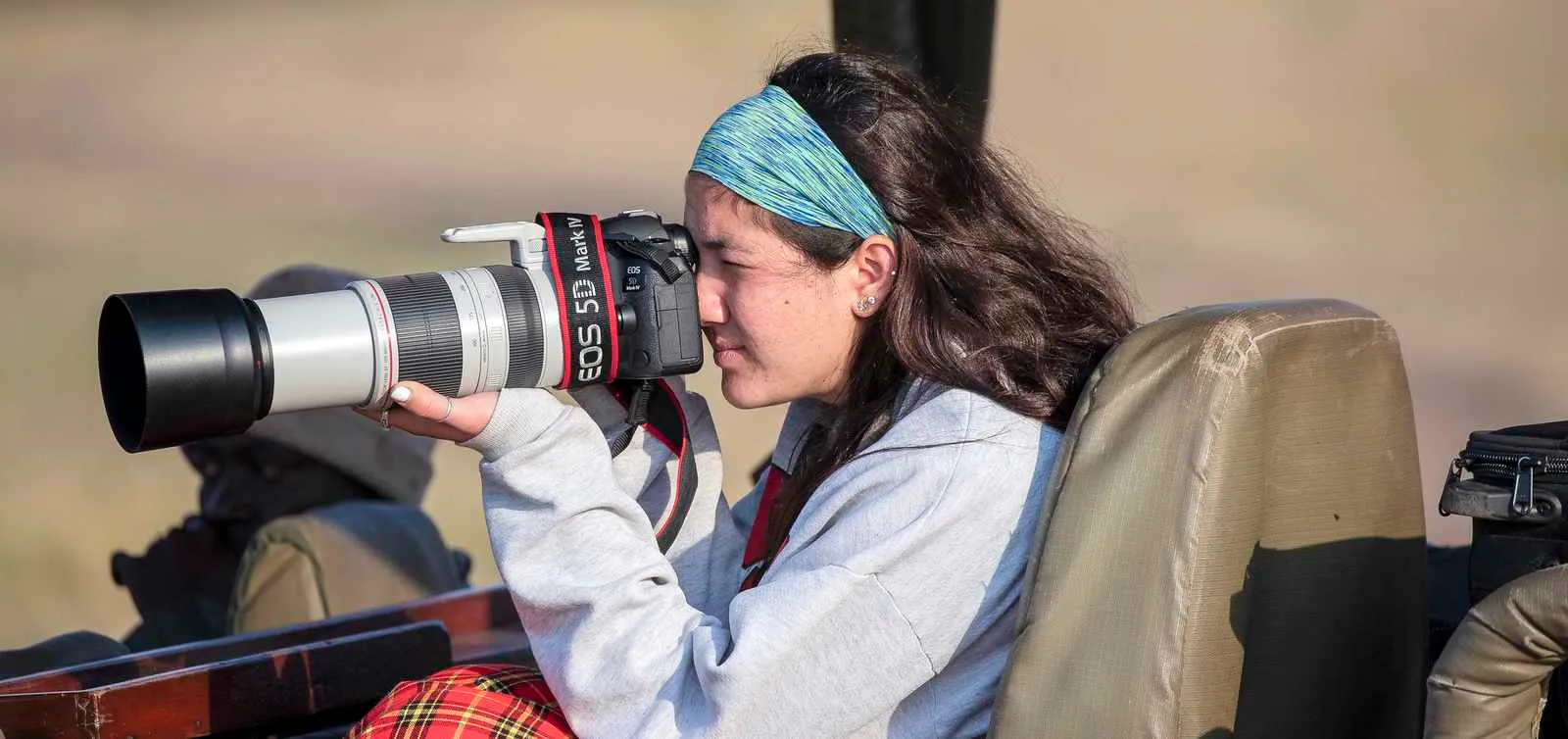
Photo Safari Best Practices: How We Plan Around Light, Not Just Animals
Most safari itineraries are built around animals. Ours are built around light — because without good light, even a leopard at five metres is a disappointing photograph.
This is not a guide for people who want to come home with a few nice shots. It’s for photographers who care about the work: the angle, the exposure, the moment. Whether you shoot mirrorless or DSLR, 400mm or 600mm, this is how we think about photo safaris at Jumbo Trails, and why it changes almost everything about how a trip is designed.
Remember that the animals are most active in the early mornings and late afternoons, which is also when the light is best. But there is less light at those hours. You will often have to shoot at higher ISOs. You will have to work with the light you have, not the light you wish you had.
The vehicle is the studio
A standard game drive vehicle seats six to eight people, rotates occupants through the roof hatch, and moves when the driver decides, not when the light is right. For a photographer, that’s a problem.
On a Jumbo Trails photo safari, you have a private vehicle. That means:
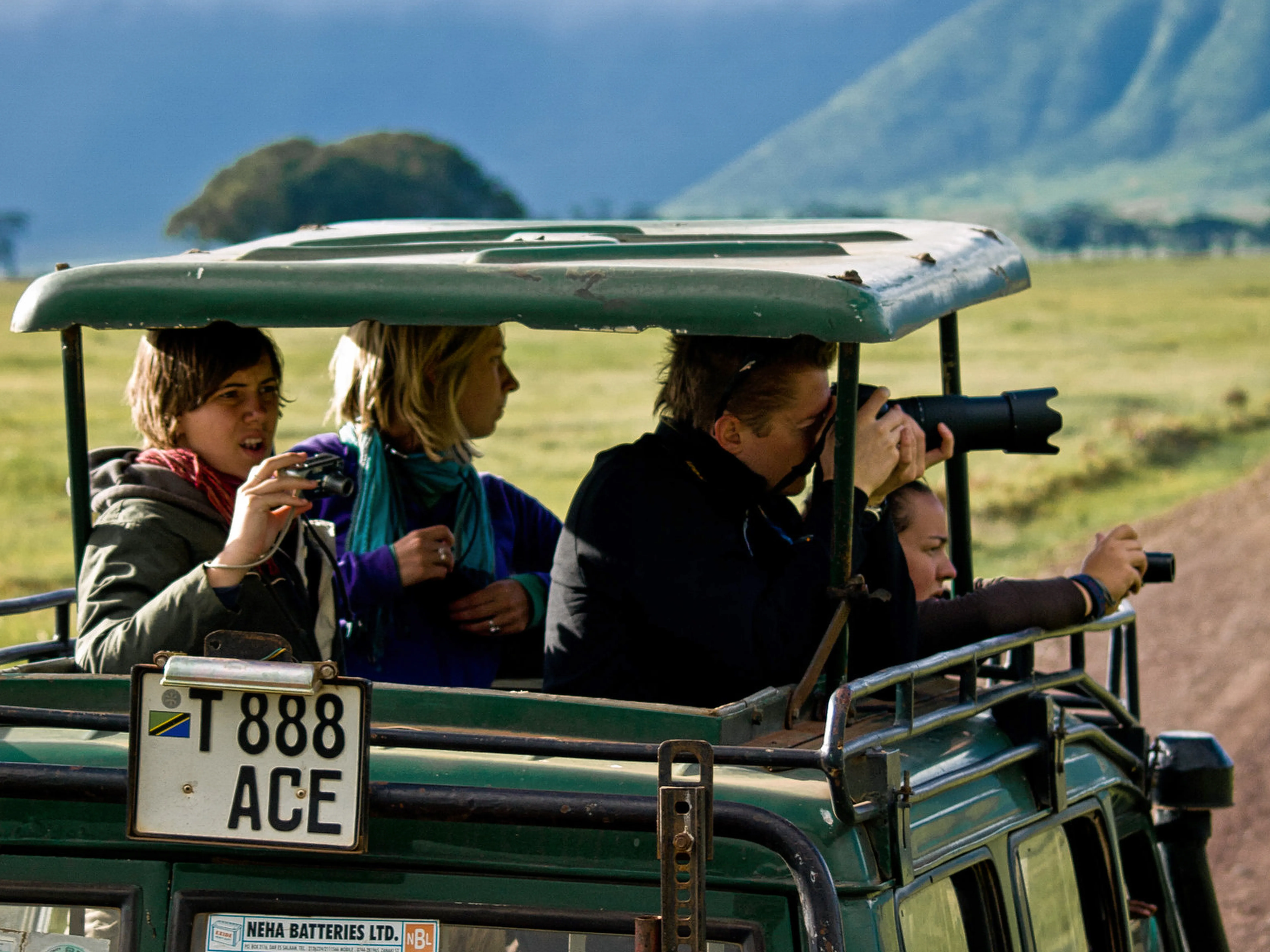
- You control when you stop and how long you want to wait for the right moment
- The vehicle is positioned for your shooting angle, not the group’s sightseeing angle
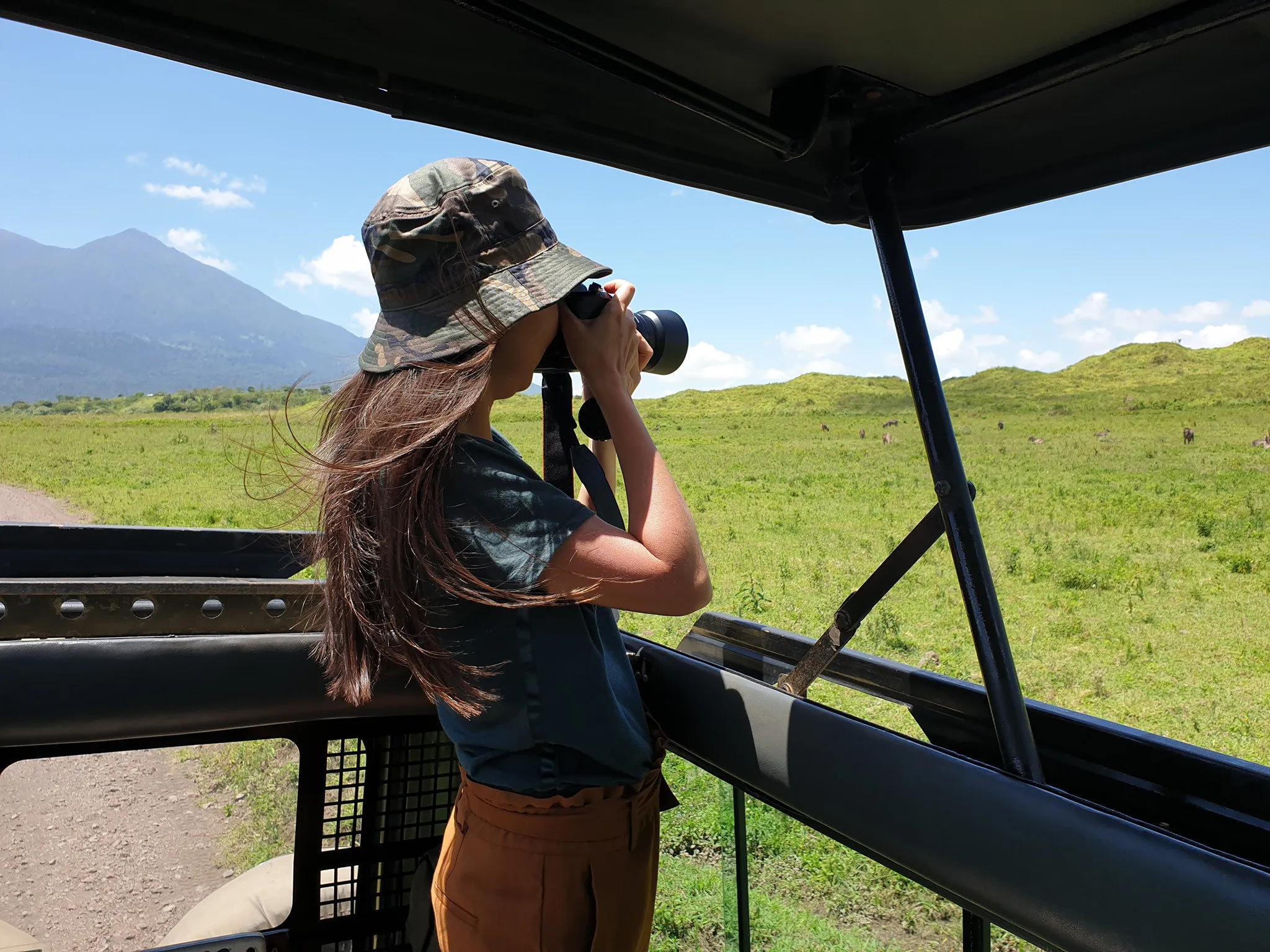
- Roof hatches are fully open for 360-degree access
- There is no one else’s elbow in your shot
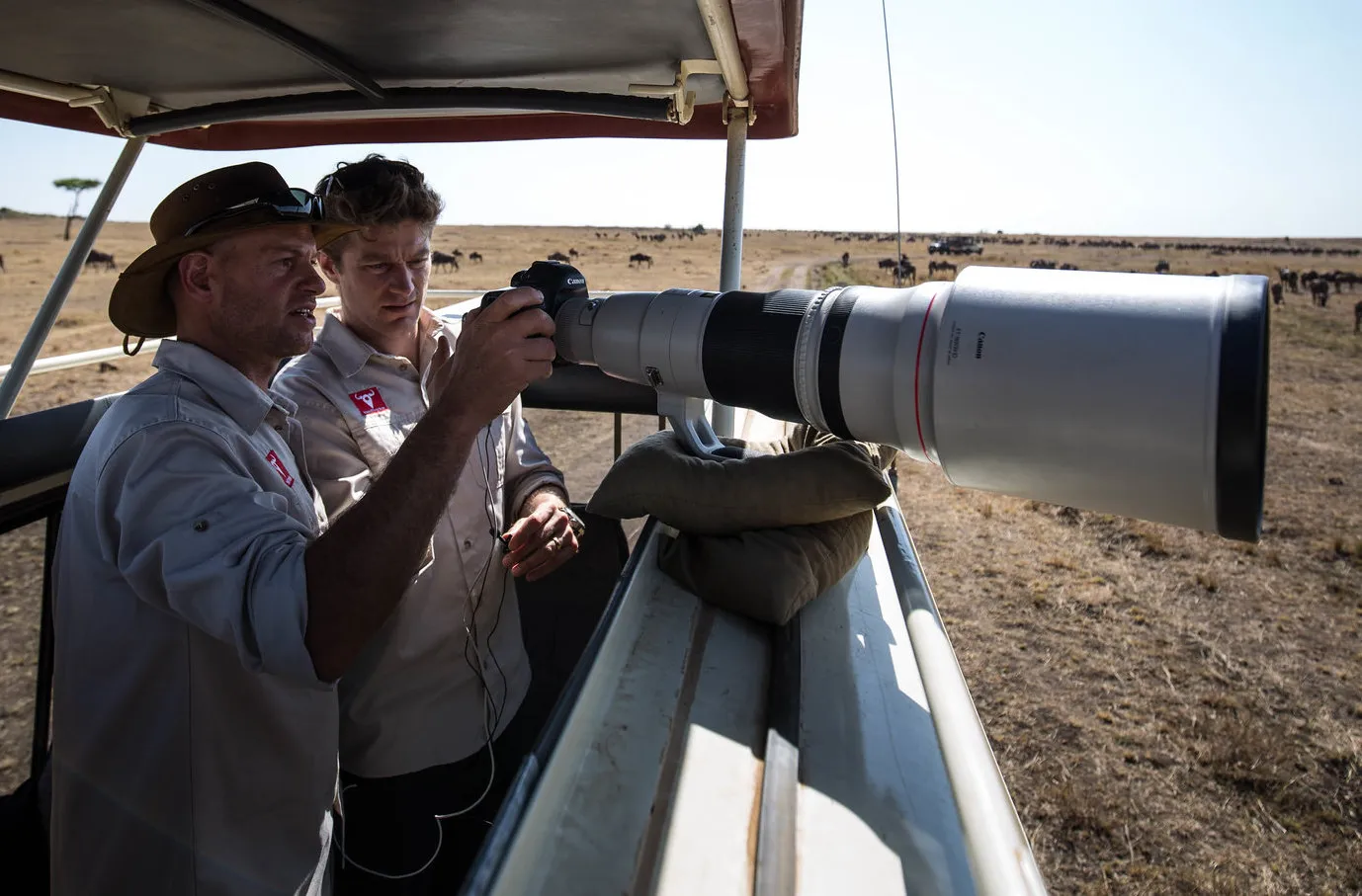
We also fit beanbags as standard on photo vehicles. A beanbag on a car door gives you a stable, vibration-absorbing rest for long lenses in a way that no monopod can match in the field. If you’re shooting at 500mm or above, this matters.
Engine off is the default when we’re with animals. Not negotiable. Vibration from an idling Land Cruiser is visible at long focal lengths, and it keeps wildlife alert. We cut the engine and we wait.
Light is the itinerary
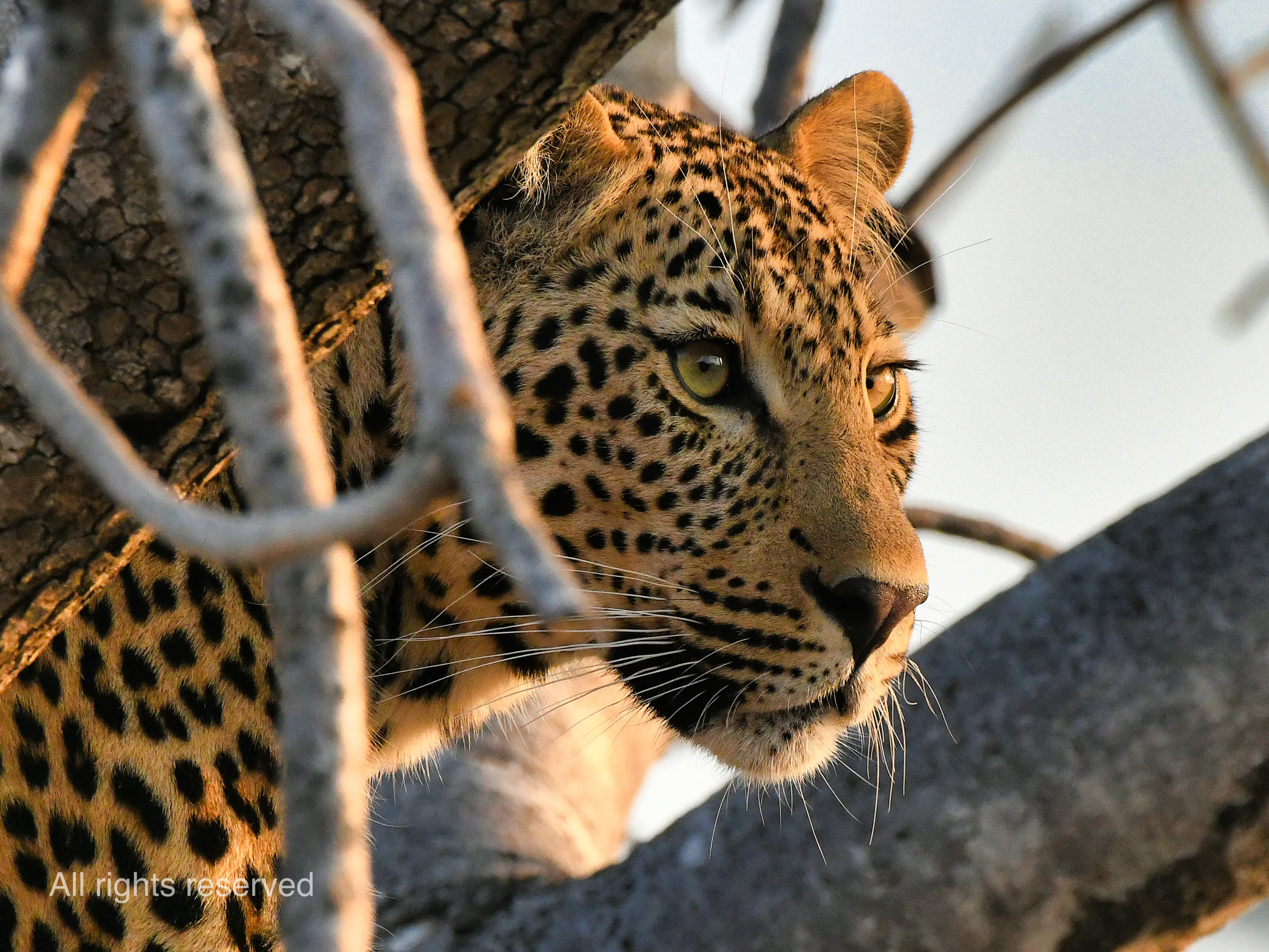
Golden hour in Tanzania is not a metaphor. From roughly 30 minutes before sunrise to about an hour after, and again in the 90 minutes before sunset, the light on the savannah is warm, directional, and low. Shadows have texture. Eyes catch the sun. Everything looks different.
The problem: most safaris use the morning game drive to travel. You leave camp at 6:30am, drive for 45 minutes to the good area, and golden hour is already gone.
We structure photo safaris differently:
Sleep in the right place. Camp selection is based on proximity to the best game areas, not on lodge comfort rankings. On a photo safari, a well-positioned tented camp will always beat a luxury lodge that’s 40 minutes from the action.
Start before first light. We leave camp early enough to be in position — engine off, beanbag down — before the sun clears the horizon. This means a 5:15–5:30am departure, depending on time of year and location.
Stay out through midday when it matters. Around the Great Migration, or during a predator sequence, we do not return to camp for lunch. We stay. We carry packed lunches and water. Missing the kill because you went back to camp for a buffet is not something we do.
Return for the evening session, not dinner. Sundowner drinks are lovely. But the last 45 minutes of afternoon light are often the best of the day. We plan the return to camp around the light fading, not around kitchen schedules.
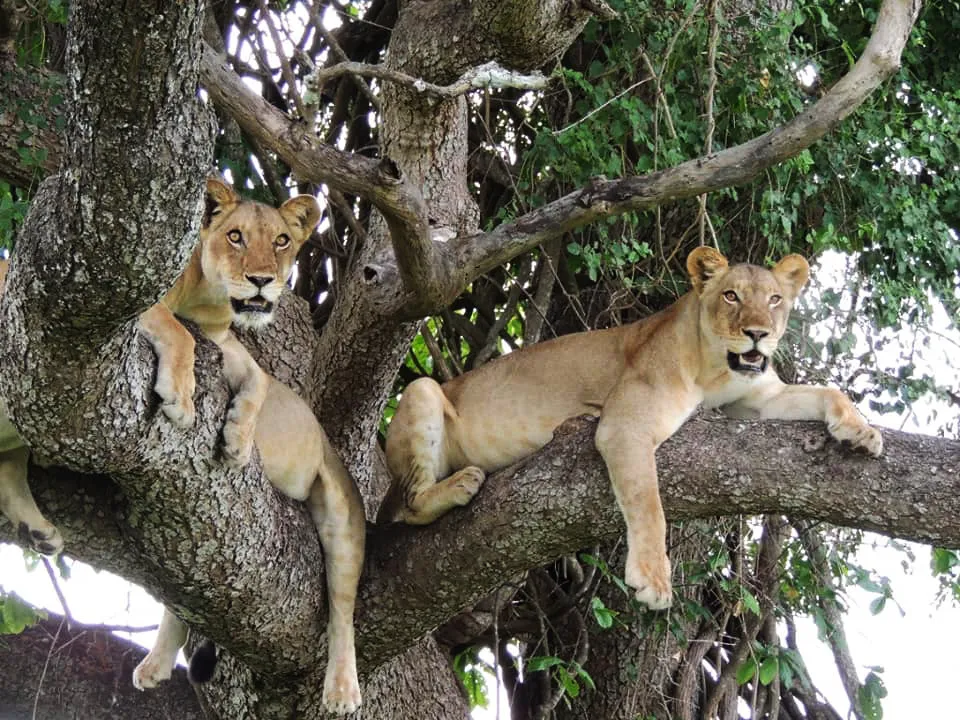
Best time for a photo safari in Tanzania
There is no single answer. The right time depends on what you’re trying to photograph.
January – March: Green season, low season, underrated
The short rains have ended, the grass is still long, and the parks are quiet. Lighting conditions are exceptional — dramatic skies, storm light, occasional mist on the escarpment. This is calving season in the southern Serengeti, which means predator action is concentrated and intense. Fewer tourists means the animals are less habituated to vehicle pressure, which produces more natural behaviour. Prices are lower and you will often have sightings entirely to yourself.
The downside: long grass makes small cats harder to spot, and some tracks are difficult after heavy rain.
June – October: Dry season, peak season, high contrast
Water sources shrink. Animals concentrate. In the dry season, particularly July through September, you will find large herds at predictable locations — waterholes, river crossings, the remaining green patches. The Great Migration river crossings in the northern Serengeti and Masai Mara happen during this window, typically July to September. These are among the most photographed wildlife events on earth, and justifiably so.
Light quality in the dry season can be harsh midday, but mornings and evenings are spectacular. Dust in the air in August and September creates warm, hazy sunset conditions that many photographers love.
The tradeoff: parks are at their busiest. At peak crossings, vehicle pressure at the Mara River can be significant. Private conservancies around the Masai Mara offer a partial solution.
November – December: Short rains, transitional
Unpredictable but often rewarding. The short rains bring the wildebeest south into the Serengeti from Kenya. The landscape greens rapidly. Skies are extraordinary. This window suits photographers who are comfortable with changing conditions and willing to work with what they find.
Gear considerations we actually think about
We don’t tell you what camera to bring. But we do think about what the field conditions demand, and we plan accordingly.
Dust. The Serengeti, Ruaha, and Tarangire are extremely dusty in dry season. A sealed camera body and lens are worth their weight. If you’re carrying open-kit glass, carry blowers and sensor swabs in the vehicle.
Power. Game drives run 5–6 hours minimum. Batteries drain. We carry 12V in-vehicle charging capability for camera batteries and small devices as standard on photo vehicles.
Long glass. 400mm is the practical minimum for most wildlife work. 500–600mm is better. If you’re renting glass for the trip, sort this before you arrive — there is no Calumet in Arusha. Also bring shorter lenses for landscape and general photography.
Second body. Dust, rain, a drop — things happen. If wildlife photography is the purpose of your trip, a second body is not luxury, it’s insurance.
Storage. Shoot with dual cards where possible. Carry a laptop or portable SSD solution in camp for nightly backup if needed.
How we accommodate photographers specifically
Beyond the vehicle setup and scheduling, a few things we do differently for photography clients:
Guide briefing. Before the trip, we brief your guide specifically on photography priorities: which species, which behaviours, what you’re working on. A guide who knows you want low-angle predator shots behaves differently from one who assumes you want to tick off the Big Five.
Flexible mid-drive decisions. If you’re 45 minutes into a drive and you find a cheetah with cubs in open grass, you stay. The rest of the day reorganises around that. We don’t have a return time that overrides a great situation.
Position discipline. We approach animals slowly, from the right angle for light, and we position the vehicle accordingly. This is not always achievable, but it’s always the starting point.
Patience as a value. Some of the best photographs come from sitting with an animal for 40 minutes and waiting for the moment. Not every guide is comfortable with this. Ours guides are, because that is how we work.
Popular itinerary examples for photographers
Northern Tanzania: The classic circuit, done properly
7–10 days | Tarangire → Serengeti → Ngorongoro
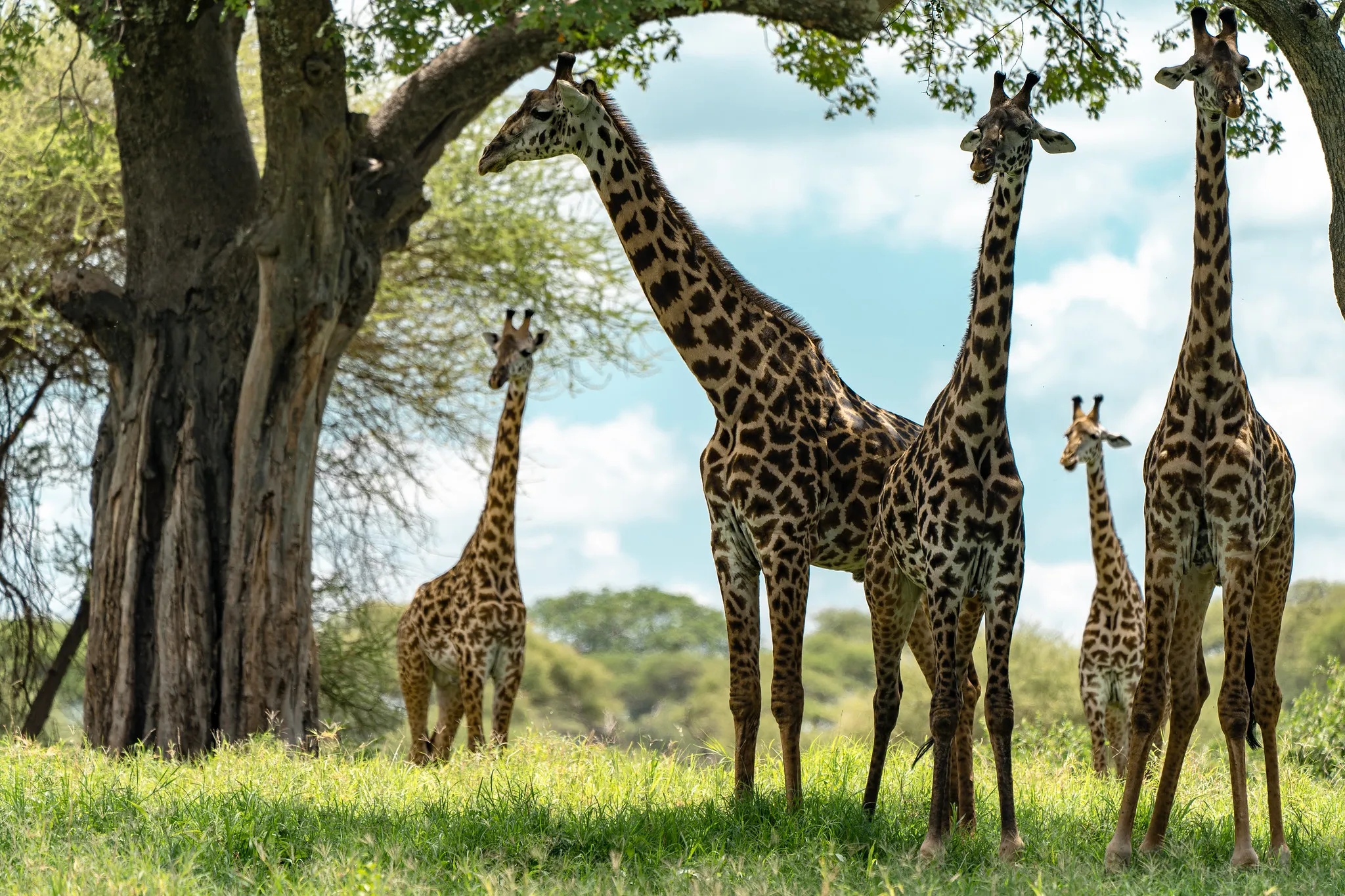
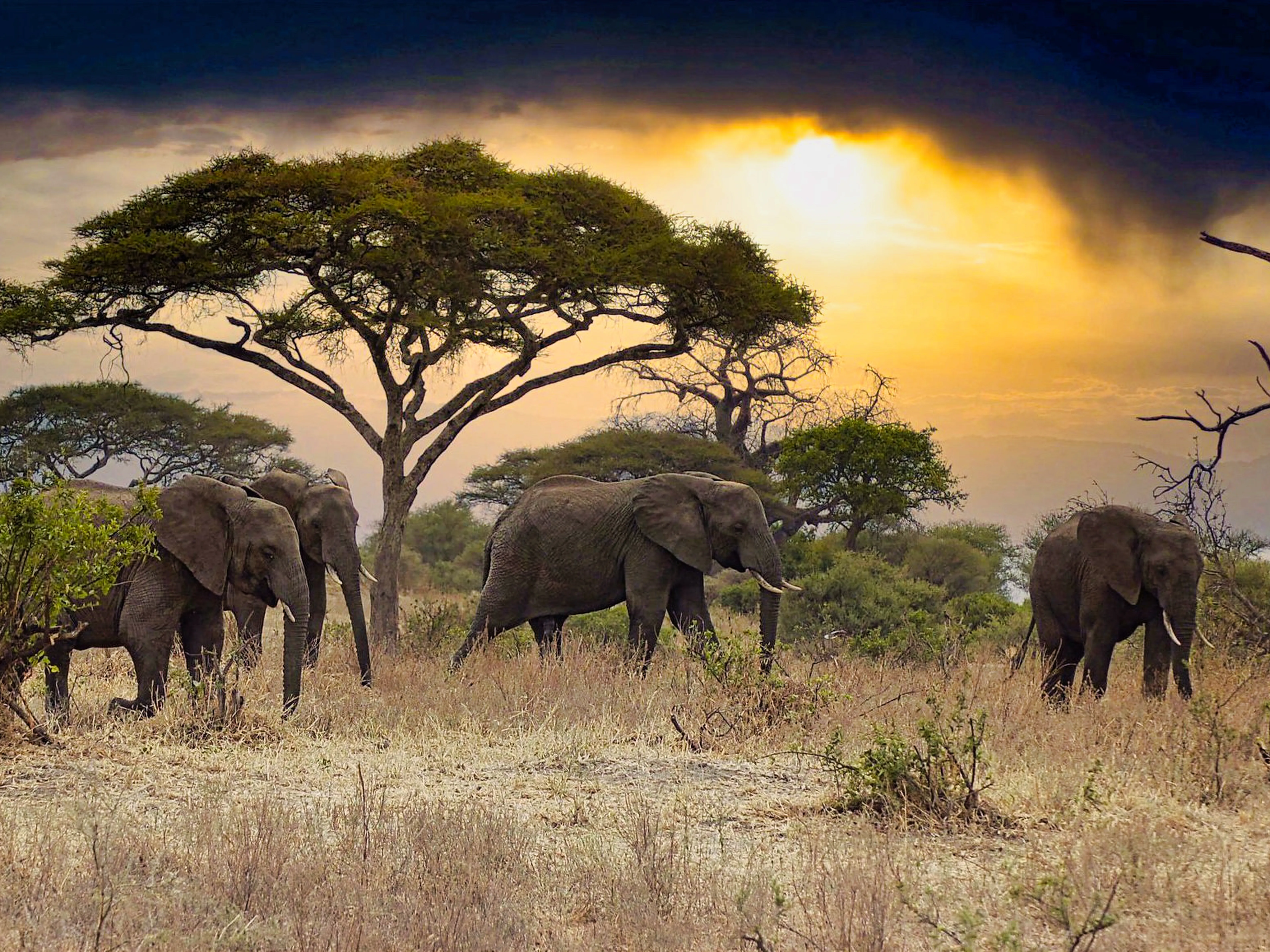
Tarangire in the dry season is underrated as a photography destination — massive baobabs, large elephant herds, and excellent light in the late afternoon. The central Serengeti offers year-round predator density. The Ngorongoro Crater produces reliable lion, black rhino, and flamingo shots, but vehicle pressure inside the crater is real; morning entry is essential.
For photographers, we strongly recommend basing in the central or western Serengeti rather than the gate area. The distances matter when you’re racing the light.
Northern Serengeti and Masai Mara: The Migration crossings
10–14 days | July – September
This is the trip for river crossings. We position you in the northern Serengeti first, then cross into the Masai Mara via the Namanga border. Private conservancies on the Mara side — Olare Motorogi, Naboisho — allow off-road driving, which the national reserve does not. For photography, off-road access changes everything: you can position the vehicle properly instead of shooting from a track.
The crossings themselves are unpredictable. A crossing may happen three times in a day or not at all for several days. A minimum of three nights on the Mara River is realistic; five is better.
Southern Circuit: Ruaha and Nyerere
8–10 days | June – October
For photographers who want to work away from the crowds entirely. Ruaha is large, dry, and wild — lion prides, wild dog, kudu, and exceptional landscape. Nyerere (formerly Selous) offers boat safaris, which give you a completely different shooting position and access to hippo, crocodile, and waterbirds that no land vehicle can replicate.
Southern circuit logistics require internal flights, which adds cost but also means smaller planes and genuine remoteness. You will see very few other vehicles.
One honest note
A photo safari done properly costs more than a standard safari. Not because we’re charging a premium on the word “photo” — but because it requires a private vehicle with less people in it, longer time in the field, specific camp positioning, and a guide with a particular mindset. If you try to do photo safari on a group basis or a budget timeline, you will be frustrated.
Come with the right budget, the right gear, and the expectation that some of the best shots require doing nothing but waiting. That’s the work.
We’re happy to design a trip around your specific targets — species, behaviour, landscape, or all three. Get in touch and we’ll start from there.